The intelligence we choose
Technology, when built with intention and humility, is not opposed to humanity. It’s an expression of us.
Technology’s purpose is, I believe, to help advance human civilization—to help everyone live happier, healthier lives. For me, it’s a deeply personal mission that’s guided every decision in my life long before I co-founded DeepMind in 2010 and began a journey into AI.
It’s fair to say that many people don’t believe technology is delivering; that it’s failing in its core purpose. What would change that?
I commissioned this journal because the AI conversation isn’t working. There’s a lot of noise, and everyone is talking past each other. Researchers talk to researchers. Artists talk to artists. Economists talk to economists. Progress and mutual understanding is stalling. There are few places where disparate ideas converge and cross-pollinate. At the same time, many people feel like AI is happening to them, not with them, or indeed for them. It feels to many like a murky, distant revolution without much of a chance to steer or respond to it.
I hope The Humanist Review of AI helps to widen the conversation and offer a critical window into what is undoubtedly the biggest transformation of our time. Change is constant and dramatic at the frontier—the compute used to train frontier models is up one trillion-fold over the last 15 years, for example.
And yet, too many of us are becoming obsessed with the technology for its own sake. We need to get obsessed with what it can do for humanity. How will it actually improve human well-being? How can we help deliver on its true purpose? These questions extend across the full spectrum of society, rightly beyond any one lab, business, organization or group. It’s a debate that must involve everyone.
I believe that we have to first stop seeing humanity and technology as rivals. Technology, when built with intention and humility, will dramatically enhance and deepen what it means to be human. All the contributors in this magazine—musicians, cartoonists, psychologists, writers, thinkers, makers—have their own, often very different views. The variety and contrasting tensions provide many interesting insights. They each help us understand the systems now emerging, confront what’s at stake and ask the hard questions. In the world we now share with intelligent machines, what does it mean to create, to work, to love, to struggle, to matter?
In the world we now share with intelligent machines, what does it mean to create, to work, to love, to struggle, to matter?
In this first issue of the Review we invited contributors to explore the topic of people and technology through three movements. Firstly, we look at the technological and social systems themselves and what they mean for people. Then we examine the stakes for us all. Lastly, we come to what can still only be called the soul, that ineradicable core of what it means to be human in an age when machines can speak and reason as we do.
Audrey Tang opens this issue with a warning: the real danger isn’t machines imitating humans too well, but humans imitating machines. Long before generative AI, we started to behave like components in ranking systems. They were making us easier to score, more compliant, more machine-legible. The right to resist optimization, Tang argues, may be the right to remain human. It’s a provocative claim, but when I look at how we’ve designed social media, credit scores, hiring algorithms, like buttons and so on, the point provides important lessons for us to pay attention to as AI rolls out.
Kwame Anthony Appiah reminds us these questions have been around for a long time. It has been over two hundred years since the birth of industrial society and the establishment of efficiency as a cardinal virtue. But efficiency isn’t always the point. Productivity is great, but we always have to ask, “productivity for what?” The journey can be as significant as the destination.
Many of the essays pick up on this broader theme. What makes us distinct—what makes us human—will only grow in value in an age of machine intelligence. Alison Gopnik, for example, looks at what children know that AI models don’t. Intelligence here is about curiosity, play, exploration, the messy and inefficient process of learning itself. There is something irreducibly human about this, a core to our own intelligence that is precious. Pak-Hang Wong then brings Confucian philosophy to questions of agentic AI. He insists that interpersonal and technological systems don’t exist in isolation. They exist in relation to us, to each other, to the world they shape. The Western default focus on individual agency and rights is not the only—or perhaps the best—framework for understanding and shaping AI’s role in human life. Starting with this bigger, even cosmically scaled picture is the way to keep AI safe.
We also examine what’s at stake as AI diffuses so rapidly: work, the economy, life, and even fundamental rights. Daron Acemoglu argues that AI and human intelligence are fundamentally different, and that decades of trying to build “human-like” systems may be misguided. The “imitation game” was always a trap. Instead, he argues, we should build AI that complements us, not competes with us. His is a critical but ultimately optimistic take on AI and the labor market. Sarah Guo, meanwhile, believes that if we would only think bigger, AI could have an even more positive impact. AI is the exciting next chapter in expanding the raw creative potential of humanity. It’s an urgent accelerant of civilizational progress that we need to embrace. Elizabeth Anderson pushes us to reckon with what work actually means. A workless world sounds like freedom until you realize that for many of us, it’s how we contribute, create, sometimes just belong. We need our lives to mean something, and work is a part of mattering, a component of life we cannot simply discard. This is a question that won’t go away.
Cass R. Sunstein asks whether AI should have rights and proposes that the capacity to feel, and to experience emotions, is what grounds moral standing. Your laptop can talk and reason, but that doesn’t give it rights. Consciousness isn’t computation and the performance of personhood doesn’t give you the real thing. As debates around “model welfare” grow, we mustn’t lose sight of what grounds our human rights. Nonetheless, there has (of course) always been more to the world than just the human. James Bridle reminds us that intelligence has never been a human monopoly. Six hundred million years of thinking happened without us. As we enter the era of AI, an octopus, a spider or a flower can teach us how little we know about intelligence itself. To understand both people and AI, we need to broaden our lens beyond both.
And then we get to what, in the age of AI, remains inescapably human. Let’s call it the soul.
Several writers approach this by examining creativity through different frames. Naomi Alderman describes creative writing as going up to the attic of your mind and holding out your hand. AI has nothing to summon. But what if it could? Should we even want it to? I love how she is willing to push her own boundaries on this and imagine a series of exhilarating creative experiments with AI. Ian Leslie explores the greatest creative partnerships—Lennon and McCartney above all—and reveals that collaboration goes far beyond the frictionless. It’s emotional, competitive, difficult, and a back and forth that transforms both parties and the end product. Can AI do this? Again, as in Naomi’s essay there is a further question of whether we’d even want it to. The implication is that we need something more than just a disembodied response or partner.
Jonathan Nolan and Will Storr discuss storytelling. Jonathan argues that storytelling without struggle feels like empty calories. Process matters. Craft matters. Even writer’s block matters! Stories do something to us precisely because they cost something to make; the craft and lived process of art is part of the art itself. Once again, AI and people are seen as very different. In making these distinctions all these creative thinkers are pointing at what could be a complementarity. AI will never be creative or emotional in quite the way we are. That’s good for us—we don’t need or want AI to somehow “compete” here. Embracing our humanity is precisely what is most important.
Alain de Botton has a different take and makes a deliberately uncomfortable argument: humans are almost boundlessly unintelligent when it comes to love. Most of us can empathize. What if AI might counter-intuitively help us grow wiser in this most human of emotions? Amy Kurzweil offers a visual meditation on creative process. What we make is never separate from how we make it. Amaury Greig discusses designing for the next hundred years, the long view that humanist building requires. Architects, he says, build things to last. Perhaps technologists should adopt that mindset as well.
And the legendary Nick Cave closes with reflections that move through loss, love, mortality, meaning, the things that cannot be engineered. The things that just are. If anyone is well placed to bring home the central theme of these essays—that technology cannot and should not ever replace the core experience and moral worth of being flawed, emotional, brilliant, connected and creative human beings—it is Nick.
I hope you enjoy The Humanist Review of AI. These explorations show that we are at the beginning of something. Collectively they pose a series of questions that will define what it means to be human in the next years. What becomes clear is that in understanding AI, we also begin to more deeply understand ourselves. Ultimately, the pieces in this journal suggest a vision of technology that isn’t opposed to humanity. It’s so much more complex than that. Like everything human, our relationship with AI will be messy and many-sided, nuanced, rich and filled with light and shade alike. People and technology will conflict, but also complement. These thinkers are all, in very different ways, helping push us towards the latter.
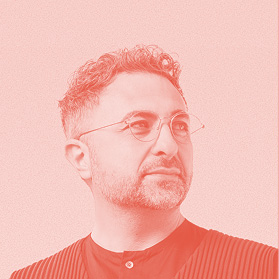
Mustafa Suleyman
CEO, Microsoft AI
Summer 2026
—–