Abstract digital artwork in shades of coral and beige, featuring a butterfly shape created with halftone dots, geometric patterns, and layered textures. The image blends organic and geometric elements for a modern look.

AI and democracy: the right to resist optimization

Taiwan’s cyber-ambassador Audrey Tang on why the real danger of AI isn’t that machines imitate humans, but that humans adapt to machines.

Audrey Tang, Cyber ambassador
A skeletonized leaf with much of its tissue missing, showing intricate veins and a delicate, lacy structure against a plain, light background.

AI is changing what we can do. Who we become is still our choice

To understand AI’s effect on moral character, ethicist Kwame Anthony Appiah goes back to John Stuart Mill, and the idea that people are shaped by their choices.

Kwame Anthony Appiah, philosopher
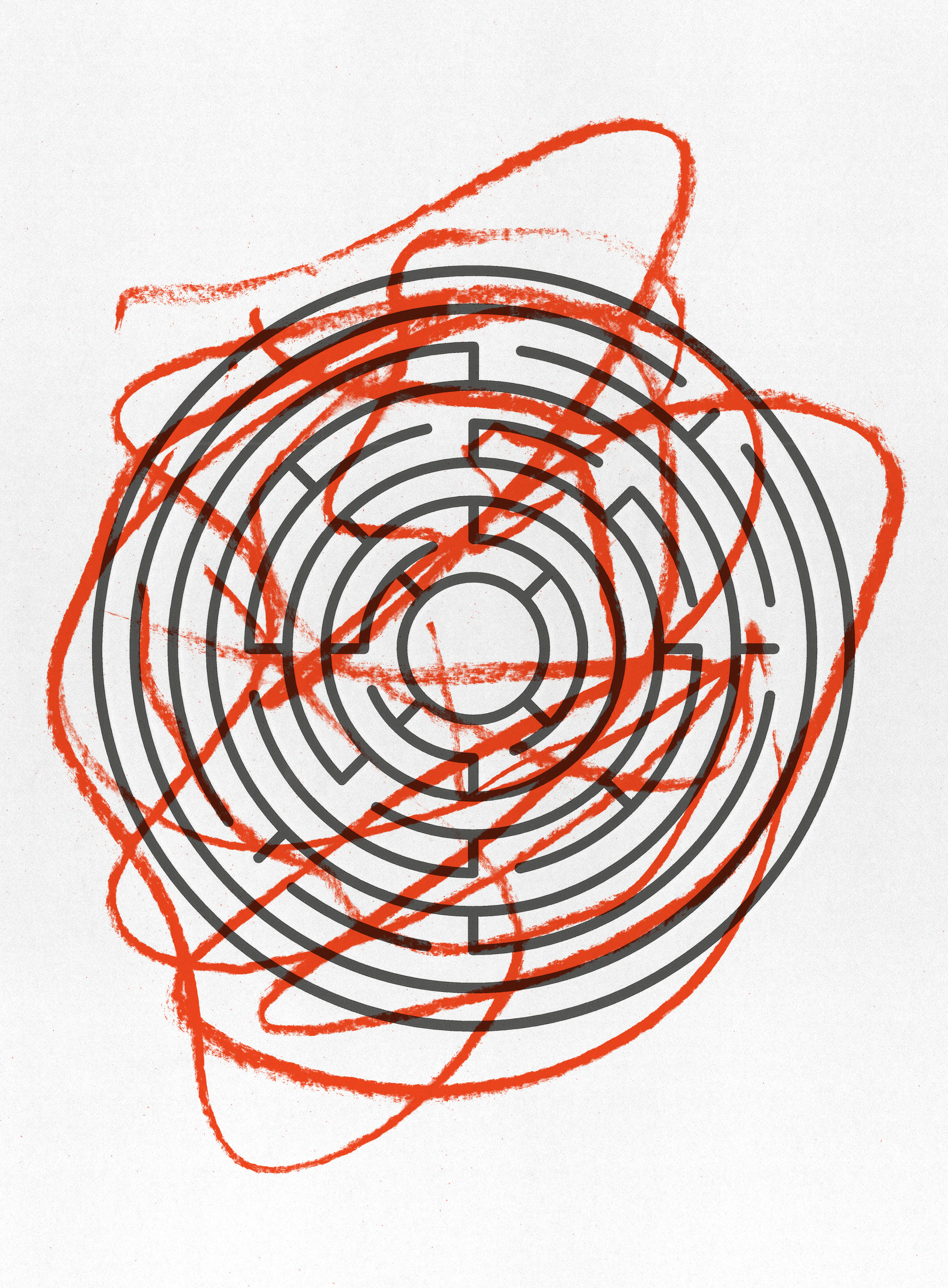
A black circular maze on a white background is overlaid with rough, red crayon scribbles, creating a chaotic contrast between the structured lines and the erratic marks.

What children can do that AI can’t

Psychologist Alison Gopnik tells three stories about intelligence — a golem, a pot of stone soup, and a digital child — to explain what AI still can’t do.

Alison Gopnik, psychologist
A blurred, abstract image featuring a large, soft-edged red circle in the center, surrounded by lighter red and white gradients. The overall effect resembles a glowing orb or sun against a hazy background.

Governing agentic AI: From human control to human becoming

Most AI governance is built on Western assumptions. Philosopher Pak-Hang Wong draws on Confucianism to propose a new foundation.

Pak-Hang Wong, Philosopher and ethicist 
A minimalist photo of sand dunes in a desert, with the image tinted in pink tones. The dunes curve gently, creating a wavy pattern against a plain, light background.

Will AI replace workers? Not if we build it right
MIT professor Daron Acemoglu argues that AI is chasing the wrong goal. Instead of replacing workers, it should make them better at their jobs.

Daron Acemoglu, Economist
Collage of pink-tinted photos with white silhouettes cut out, showing a person walking on a beach, a person by a wall, a car, a child on a swing, a dog, a rock, and a stack of books.

Does AI have rights?

Cass R. Sunstein, Professor

Current issue
PEOPLE & TECHNOLOGY

A pink-toned image of a round vase with five long-stemmed flowers. The flower heads have been replaced by white gear shapes, giving the arrangement a surreal and abstract appearance.

AI will change work. The biggest loss won’t be economic
Philosopher Elizabeth Anderson on why work gives life purpose, mastery, and autonomy, and why a future without it isn’t the liberation it seems.

Elizabeth Anderson, Philosopher
A faded image of a large stone castle ruin on a hill, overlaid with clusters of red and white dots.

Writers agree: AI isn’t a novelist. So why is this author interested?

Naomi Alderman is a best-selling, award-winning novelist. She thinks AI writing is terrible. She’s fascinated anyway.

Naomi Alderman, Novelist
A sepia-toned fossil imprint of a plant with multiple leaves is displayed against a textured stone background.

AI was built on human intelligence. Nature has more to teach
Six hundred million years of thinking happened without us. Writer James bridle on what can an octopus, a spider and a flower tell us about the nature of intelligence.

James Bridle, WRITER
A red-toned flower illustration is overlaid with a white checkerboard pattern, creating a fragmented visual effect.

What Lennon and McCartney can teach AI about collaboration

The greatest creative partnerships ran on friction, ego, and love. Author Ian Leslie asks whether AI can ever get there.

Ian Leslie, Author
Two softly blurred, white face profiles on a pink background, facing each other closely, with gentle lighting and minimal detail, creating an abstract, dreamy effect.

Alain de Botton: AI doesn’t kill love, it could rescue it

Humans could use some help when it comes to matters of the heart. What if technology could help us where we have been hopeless?

Alain de Botton, Writer
A silhouette of a person holding a child, overlaid with handwritten text and an urban background in a red and white duotone style.

Jonathan Nolan co-created Westworld and co-wrote Interstellar. How does he see AI?

Screenwriter Jonathan Nolan and author Will Storr discuss what AI gets right about stories, and what it’s missing.

Jonathan Nolan, Screenwriter and producer & Will Storr, Author
A single checkered flower with curved leaves and stem, illustrated in white on a pink background.

AI could transform healthcare and education. Why aren’t we more ambitious?

Investor and technologist Sarah Guo argues that the biggest risk with AI isn’t moving too fast, it’s thinking too small.

Sarah Guo, Investor
Abstract image of a city skyline in red tones with blurred, vertical streaks, creating a modern, artistic effect.

The architect as humanist builder: why AI can’t replace craft
A conversation with Amaury Greig, a partner at Renzo Piano Building Workshop on the original human-centered design: architecture.

Amaury Greig, Architect
A person with long hair sits at a tilt-top desk, drawing on a digital tablet with a stylus. They look focused and determined. The image is rendered in black-and-white sketch style.

Amy Kurzweil on the value of creative process

What’s left when the draft is gone?

Amy Kurzweil, Cartoonist
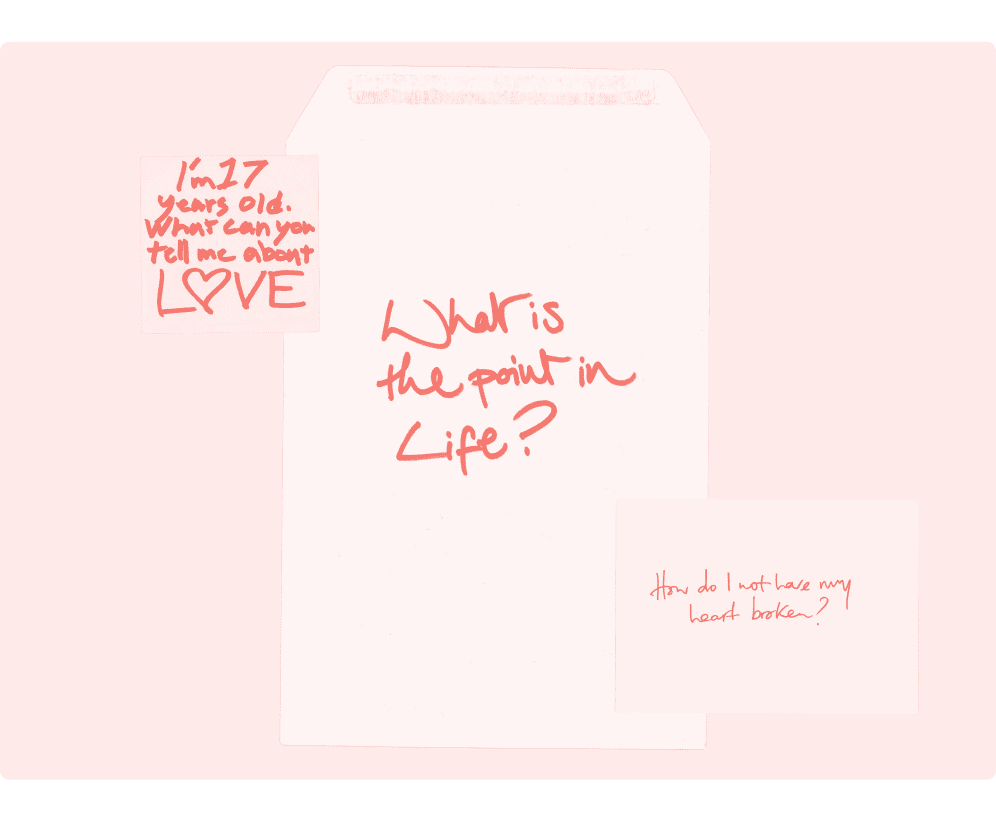
A pink and white image with handwritten text: “I’m 17 years old. What can you tell me about love,” “What is the point in life?” and “How do I not have my heart broken?”.

Nick Cave on grief, creation, and what AI can never write
Nick Cave, Musician
English (United States)
Your Privacy Choices Opt-Out Icon Your Privacy Choices
Consumer Health Privacy Sitemap Contact Microsoft Privacy Manage cookies Terms of use Trademarks Safety & eco Recycling About our ads