Humans, again and again
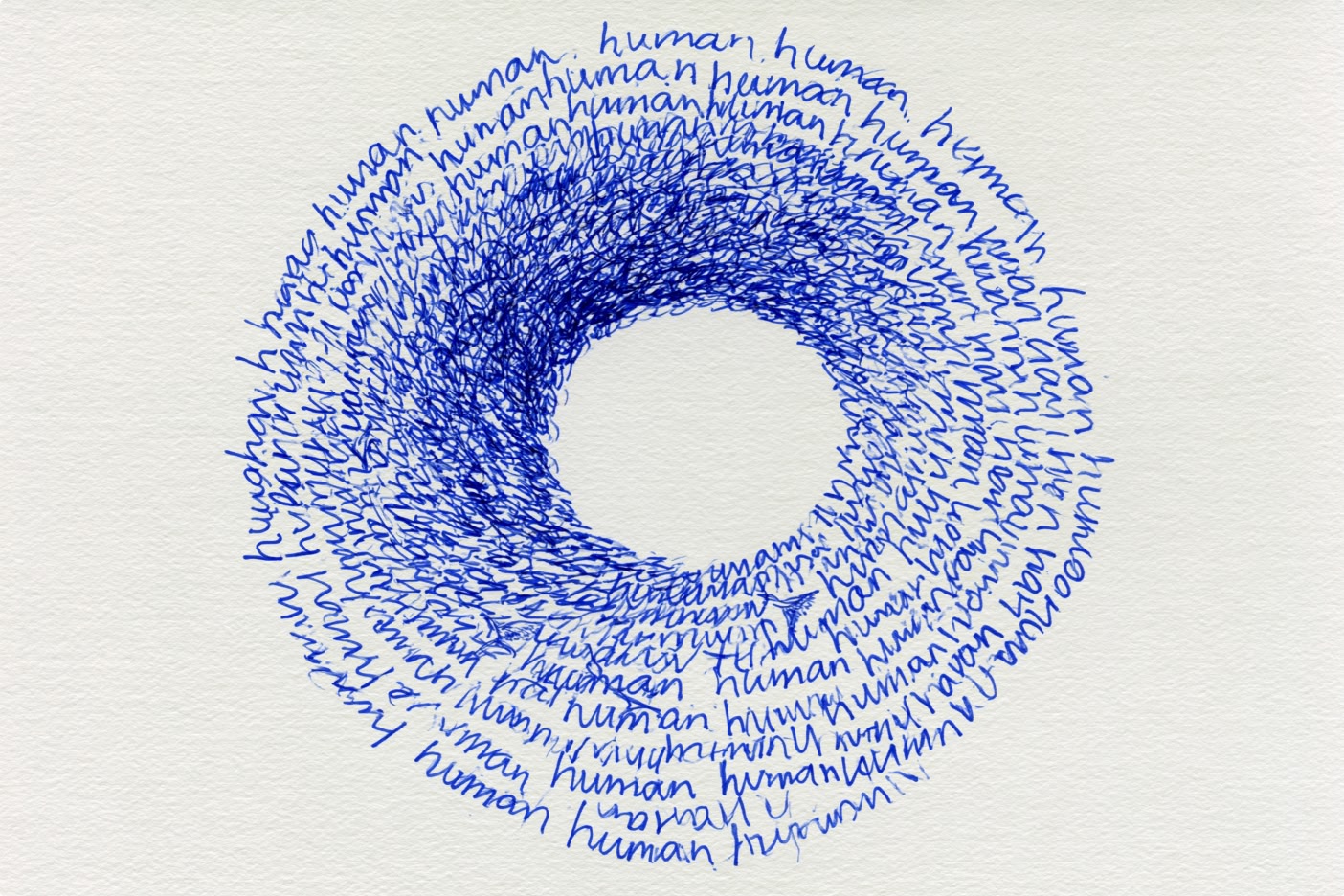
We asked the 17 contributors to the first issue of The Humanist Review of AI what the intersection of people and technology means to them. Across 56,000 words, they explored intelligence, work, morality and creativity. But one word appeared more than any other: human.
The technology changes what we do. But does it change who we are? Each one of our essays answers differently.
We ran a semantic analysis of the essays (more than 56,000 words) and found that “human” is the most used word (it appears no fewer than 293 times), twice as often as “work.”
Taiwan’s cyber-ambassador Audrey Tang writes that the danger is not machines imitating humans, but humans becoming machine-legible. Ethicist Kwame Anthony Appiah thinks that people are shaped by their choices.
The word “work” also appears prominently. In the Review, MIT Institute Professor Daron Acemoglu makes the case for AI to be built as a pro-worker technology, not as replacement for workers. Philosopher Elizabeth Anderson explores how we often miss the mark when we think about technology and work: working is not just doing tasks; it is also, to many people, giving a sense of purpose and autonomy.
Working is not just doing tasks, it is also, to many people, giving a sense of purpose and autonomy
Should we let technology change who we are, if it changes how we work? Each essay answers differently. But technology is never the only theme in the room — it always travels with something else.
Thematic Density
How ten core themes distribute across the issue, essay by essay
Exploring the technology leads to exploring the autonomy, and intelligence, but also, perhaps more surprisingly, morality, creativity and love.
Philosopher Alain de Botton asks what AI could do for love — not abstract love, but the daily mess of relationships. To people doubting how beneficial AI-powered love could be, he asks: “Have they stepped out and seen the carnage that presently goes on in the name of romance?”
Every contributor was commissioned independently of the others. And yet, the essays answer one another and share significant vocabulary.
The whole point of creative writing is that I am trying to come up with sentences that cannot be predicted.
Novelist Naomi Alderman writes in The Séance about the struggle of creation — “The whole point of creative writing is that I am trying to come up with sentences that cannot be predicted,” she says.
Screenwriter Jonathan Nolan arrives at the same question from a different angle: if storytelling is “totally bereft of intentionality, is it the storytelling equivalent of empty calories?” In a conversation with the author Will Storr, Nolan says that AI could be useful: not to write, but to try something that one never had the courage to do. “I’ve written a number of movies and stories about AI as this benign fairy godmother, a guide who helps you through an experience, gives you the courage to try something,” he says.
Vocabulary Connections
Which essays share the most vocabulary — a map of hidden conversations
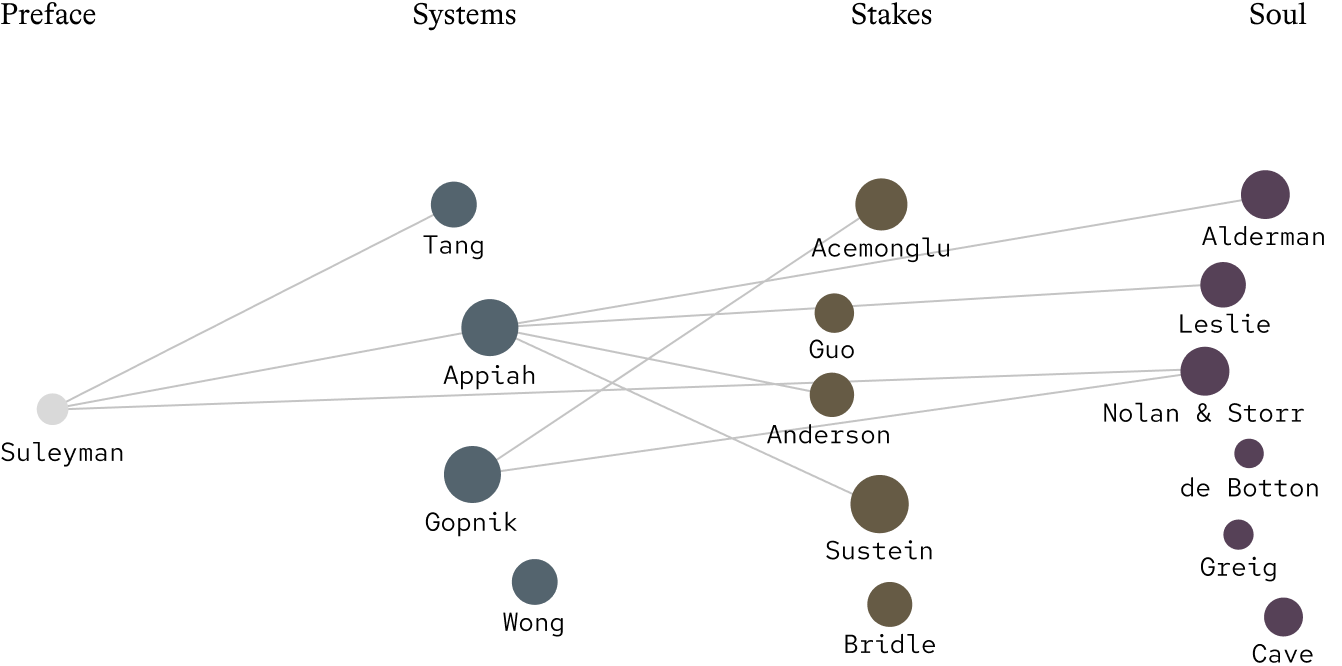
The hidden and unexpected conversations between essays might be the most interesting dynamic we found while reading and analyzing our content. Not every essay will come to the same conclusion, or share the same view on what AI is and where its development is taking us as individuals and society. This, perhaps, shows that we are still trying to answer a much older question: who are we? Humans, after all.
Note: we used Claude Opus 4.6 for this exercise.