

Writers agree: AI isn’t a novelist. So why is this author interested?
Naomi Alderman is a best-selling, award-winning novelist. She thinks AI writing is terrible. She’s fascinated anyway.
If there’s a principle that I have lived by all my writing life, it’s this: if I feel there’s something I’m not supposed to say, that is what I must say at once.
I’m obviously not talking about shouting insults at strangers. I’m talking about those things that are completely taboo, but which seem to me to be very true. Or to have a great part of truth in them. Things which I feel might get me into trouble if I say them. I’m talking about how I ended up writing my first novel, Disobedience, about the way that gay and lesbian people are treated in the Orthodox Jewish community I grew up in—even though I knew it might lose me friends in the Orthodox Jewish world. About how I wrote my feminist novel The Power on the subject of how, in fact, women are no more morally good than men on average, even though I knew some feminists might get upset with me about it. If nobody else is saying something, but if I feel very strongly that I know it to be true, then I have to say it.
So here we go. Deep breath.
I am a novelist and I’m interested in AI. Since I started playing around with it, I’ve felt an expanding sense inside my mind of what “being a writer” might mean in the future. I feel afraid and I feel exhilarated and I want to know what’s coming next.
Now look, in the world of novelists, it is obvious why saying this is a terrible problem. But I realize that in Silicon Valley it might not sound so intensely shocking. So, let me explain the kinds of conversations that are happening among professional writers about AI use. Here’s a random sampling of things that have floated across writer social media recently:
“Anyone who wants to be taken seriously as a writer or a thinker of any kind should not be using it at all, not even as ‘a tool.’”
“I know writers who use AI and they’re not writers.”
“Why would I use AI? I actually know how to fucking write.”
“No author worth reading uses AI.”
“I wouldn’t let AI anywhere near any of my writing for any reason.”
“You wrote a novel using AI? Cool. It’s like that time I ran a marathon using a Ford Focus.”
Indeed, feelings are running high. A lot of writers feel angry that AI was trained on our work. But more than that: it feels to many writers that there is an attempt to take us away from the way that we think. If you’re a writer, you think by writing. So tools that promise to make writing easier and faster, tools that say they will do the writing for you, feel like they are telling you that you need to stop thinking. I do understand this. I have made sure Copilot is turned off in the copy of Word I use for my novels. Bringing a novel into the world, at least the way I do it, is too tender to be exposed to random incorrect suggestions for what the next sentence might be. The whole point of creative writing is that I am trying to come up with sentences that cannot be predicted. I understand why some writers feel horrified by it.
Look, I don’t think AI is going to solve all the world’s problems. I don’t think we’re about to get Iain M. Banks’ omniscient Ship Minds, or other godlike superintelligences. I don’t think it’s about to become conscious. But when I experiment with vibe coding I can see that AI is making a whole range of things possible that weren’t possible a few years ago. It is a technology that’s only recently been thrown open to the public and with that massive number of users we are discovering every day the things that are possible with it. I am absolutely delighted to do my own experiments, and explore that jagged edge: the places where it entirely fails, the places where it is unexpectedly brilliant.
I have used vibe coding to create my own task management system, something that works well with my personal brain. I often find it hard to get started and just want to be given a random task from my to-do list—now I have a task manager that will give me a random next action from tasks that I’ve flagged as being important today. It wouldn’t necessarily work for anyone but me; but it really works for me. I’ve had great success using AI as an advanced research tool: like everyone, I’ve discovered that I can’t rely on it exclusively. But if I ask it to search for articles in peer review journals for me, it’s dug up things that I wouldn’t have found myself. Particularly wonderful and extraordinary for me: it can search in languages where I don’t even know the alphabet or writing system. It enabled me to research a BBC program on an 11th century Chinese poet, about whom very little is written in English. When it works well, it is clearly an enormous step forward from anything that has existed before.
I don’t want it for my novels—they are the creation of my singular mind. But I am interested in knowing what kind of writing I could do with it. I’ve used AI a bit for this piece—because my hands get sore I sometimes use voice recognition to write a first draft, which has some AI helping it transcribe my words accurately. I asked an LLM to go over the piece for me for fact-checking purposes, and to comment on structure. It’s a bit useful for that, but honestly I am not that excited by how AI could help with writing things that I could easily write myself four years ago.
The thing that excites me is the idea that there might be kinds of writing that are only possible now that AI exists.
The thing that excites me is the idea that there might be kinds of writing that are only possible now that AI exists. The invention of the train wasn’t exciting because it could get you a couple of miles down the road, a distance that you could walk yourself anyway. The invention of the train was exciting because of the things that hadn’t been possible beforehand that it made possible. Letters that could travel from one end of the country to the other overnight, enabling business empires to exist where one person could communicate easily and be involved in the day-to-day running of companies across the country. Enormously powerful goods haulage, the possibility of fast, long-distance business travel.
Sometimes I feel so fascinated by the possibilities of AI writing that I have to talk myself down from emailing some AI company or other and saying: “any interest in working with a really good novelist?” My least popular opinion among other writers is that some days the developments in AI make me feel breathless with excitement. And that I want to be in the room where these things are happening.
I think this might be how I end up getting thrown out of half of my friendship groups.
Here’s a description of the thing I can’t stop thinking about. It’s the same thing I haven’t been able to stop thinking about since I was eight years old and first got interested in computer games and what they could do. Since I went to a children’s book fair held by Puffin, the children’s arm of Penguin publishing—where alongside the books there was a bank of computers along one wall and children were queuing up for a turn to play a text adventure. Or as we thought about it at that time, “an interactive novel”. What I have never been able to stop thinking about is the question of: how can I walk inside the world of the story? Not just read it, but be inside it. Not just look where the author is telling me to look, but to be able to turn my head, look in any direction and see the world of the story there.
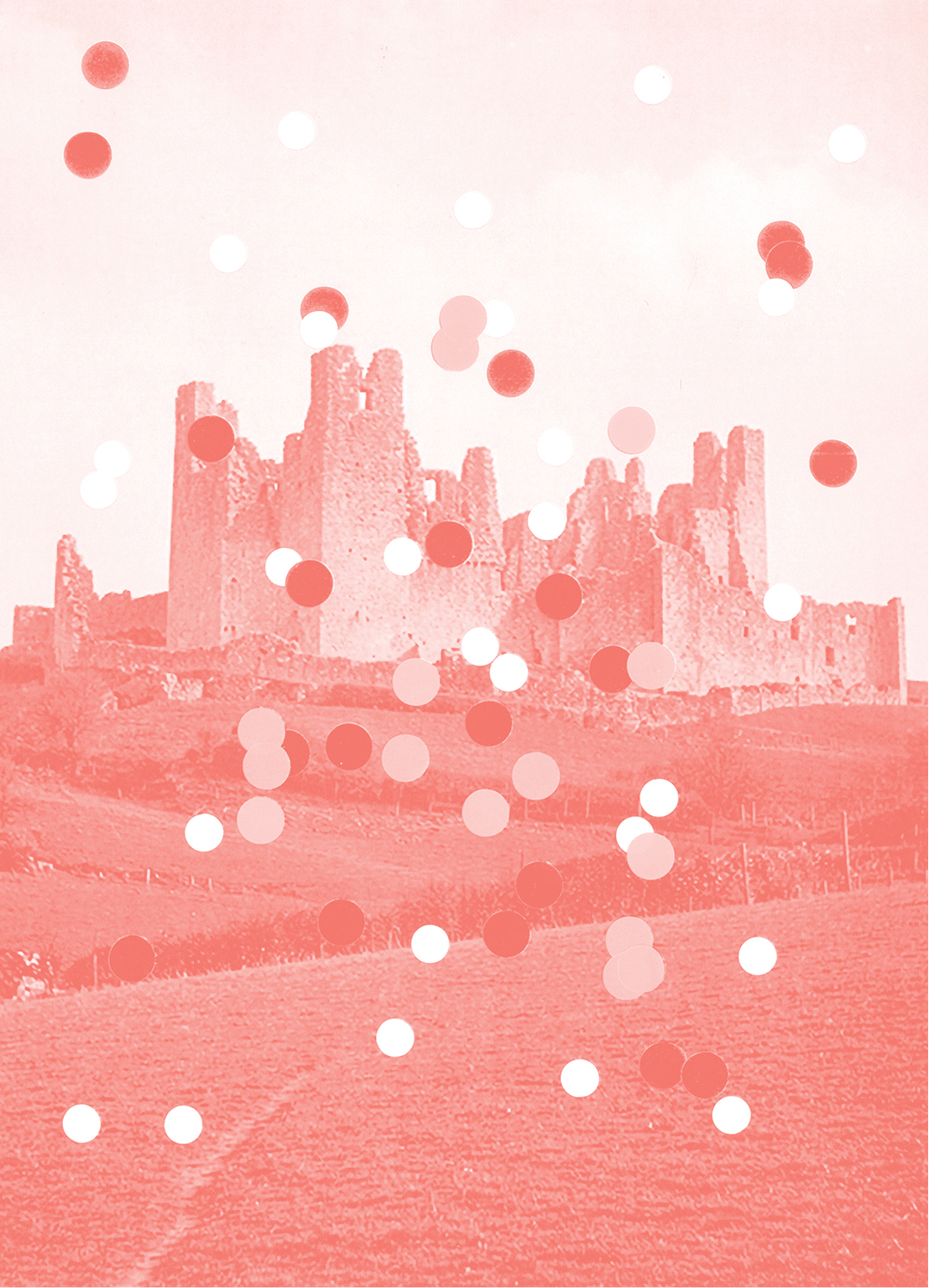
I’m thinking of, for example, the 1948 novel I Capture the Castle by Dodie Smith. It’s a classic British coming-of-age tale about a young girl, Cassandra, growing up in a rackety bohemian family. It’s funny and delightful and if you haven’t read it yet, please do. Cassandra’s father once wrote a very successful difficult modernist novel called Jacob Wrestling. It’s a fictional book inside a book; Smith tells us tantalizingly that one chapter of the book is “in the form of a ladder” with a sentence for every rung. What on earth does that mean? Aren’t all books printed with a line for every line? What could be in there? What does it look like? All my life, since I first read that novel, I have wanted to read Jacob Wrestling. Could we try to write a version of it?
This is the kind of thing people try in fanfiction all the time. I love fanfiction; the impulses of it. Fanfiction is what you do when you can’t get enough of a story, when you just want to spend more time there. It’s the same thing people have been doing with storytelling since our earliest myths. I want to walk into every book that I read and… poke around. I want to look inside the desk drawers of the characters and read their letters. I want to talk to the minor characters who only appear in one scene. I want to have my own journey inside that world. It’s this feeling that got me involved in video game writing. But it’s still not enough for me.

I want to see if I can make a world like this using AI. It would be a place where I am in charge, or maybe a team of brilliant writers are in charge of exactly what we want this world to be and do, the kinds of stories that we want to be able to happen there. But we want every door to be openable, and every book in the world to be readable. We want to set up enough rules so that an AI system might be able to figure out, or at least come up with a good idea for, what each of the books are on all of the shelves in every library in that reality. I think it would probably involve almost constant participation from human imaginations, answering dozens, thousands of questions, in the way that happens when you go into a writer’s room working on the TV show of your novel. I have had this experience, it is exhausting and it is exhilarating. When you turn your novel into a TV show, a room full of clever writers ask you a thousand questions and if you’ve really thought the world through properly then you find that you can actually answer quite a lot of them. Some of them you have to take away and think about. How would this work in my world? What does that character want? What was her maternal grandmother like? The more you’re asked, the more fiction you find you can pull out of yourself. This is a model of how it might work to collaboratively create an entire fictional world between LLMs and human writers. I want to see whether the AI could be trained to do the right kind of writing for a particular world over and over again, faster than the greatest team of human writers could ever work. I don’t know if it’s possible. It will involve a lot of false starts and false directions. It might be that one could try and try and yet never produce anything worthwhile this way. And yet. Maybe.
People in those friendship groups that are about to throw me out will start by saying: but what about the ethics of this, Naomi? I understand the arguments and the ethical problems around AI. It is a very resource intensive technology, and comes at a time when the effects of climate change are undeniable around the world. That feels like an incredibly important problem that we need to be addressing collectively and in individual companies. It’s a technology that was trained not just on the work of professional writers like me but also the work of millions and millions and millions of unpaid people who were just putting their ideas and thoughts onto the internet for other humans to enjoy. AI technologies right now are taking from that shared resource and not putting anything back. If we’re going to use this to make interesting, maybe even extraordinary art, we have to also think carefully about how not to drain the shared resource and destroy the creativity that made it possible. And AI in my view is not for children. This is a technology that you can come to once you have already learned the traditional skills of thinking, writing and research. We cannot allow it to de-skill our own brains. But these are arguments like arguments around the early railway industry which was a fast-moving industry that made business at scale across a country possible, but was also terrifically dangerous in its early years. They’re arguments for increasing railway efficiency, train safety, protections for workers, train reliability, for making trains available at low-cost to anyone who could use them and for compensating workers fairly for their work on train manufacture. They’re not an argument for no more trains.
But then, there are also reasons to think that it couldn’t work. Creative writing is not the same as non-fiction, and it’s not the same as business writing. Non-fiction writing is sensible and coherent, we make arguments and we think them through; there are agreed standards for what an argument is.
Creative writing, I’m afraid, is a bit more like a séance. Margaret Atwood talks about writing as negotiating with the dead. It’s more like this: you go up to the attic inside your mind. You hold out your hand. You wait. If the thing doesn’t work then nothing happens and you’re just standing there in an attic with your hand out like an idiot. If it works, then the you that is in charge during the day vanishes and when you return you know that it’s been successful because there are burn marks in the palm of your hand maybe in the shape of little bird claws, or as if some red hot iron leaves fell there. A strange scar like a bite mark. You stare at your palm, you wonder where that came from, you don’t have any recollection—or just a bare recollection, from far away—of how it happened. When authors tell you where their ideas come from, I think they are almost always making up a story about that itself. We are composed of many parts, and the part that pays my parking fine and does the laundry is not the same as the part that emerges when I go into the attic and stick my hand out.
Creative writing is where you make intuitive leaps which don’t make sense in the daylight world but make a deep kind of sense to the unconscious mind. The better you get at making sense, the less good you are at making creative work. It’s not true that all creative people have troubled lives and mental health problems. But it’s true that making creative work involves encouraging those parts of yourself to speak which you wouldn’t otherwise want to let out in public.
There are other reasons to think that it can’t work. As is obvious to anybody who has worked intensively with AI, it reverts to generalities incredibly quickly. This is because it hasn’t actually ever lived a human life. As I write this piece, I am looking out of my window and I can tell you that the wisp of cloud going over my office looks for a moment like a witch’s hat, and then like a man crawling with his arms, dragging his legs behind him, and then like a baby bird with its mouth wide open. An AI has never seen any of these things. It has never sat at a desk. It has never fallen in love, it has never burned its mouth on hot soup, it has never stuck its hand into soil or had to walk quickly through a dark alley hoping that no one was after it. It can remix the words created by people who have had these experiences, but it does not have any experience it can describe for itself. It is these experiences that writing comes from. So perhaps the AI will never be able to really write well.
Most importantly, perhaps it has never had the experience of reading. This might seem a ridiculous thing to say. After all, all LLMs are created from ingesting millions upon millions of words. Isn’t that the same as reading? Well, no. No it’s not. What we’re doing when we’re reading is forming images and ideas in our minds; we are assessing the words that we are taking in according to the experiences that we’ve had in our own lives. When we say that a character is unconvincing, that is because we are comparing that fictional person with all of the hundreds and thousands of people we’ve met across our lives. When we are reading, we are allowing each word to land in our minds, with all of its web of possible meanings and associations and strange subconscious links. The effect that reading has on us is not an effect purely of taking in data. Words emerge from lips and mouths and chests and voice boxes and lungs. The experience of reading, for humans, even quietly and alone is a physical embodied living experience.
If humanism means anything it is this: that we take the experience of being human seriously, that we place it at the center of our ethical, cultural and artistic lives. That we consider this experience, being a human on this planet, to have inherent dignity and be inherently worth of study and respect. On this level, really, why would we want an AI to ever write anything for us? Writing is how humans communicate with other humans about what it is like to be alive. Perhaps the writing that an AI will produce will always be on some level deeply unhuman, uncanny, dead but yet alive, what Freud would have called unheimlich.
I have to tell you something at this point. No AI has yet produced a single sentence that I would not be embarrassed to publish under my own name. I’ve tried, and I’ve experimented. I have a lot of ideas, more ideas than I could actually write during my lifetime, I am pretty sure. Every book’s worth of work generates enough ideas for another three or four books. It would be amazing to be able to harness AI to get some of those ideas out of me and into the world. But the writing is just so bad. Even trying to use an AI to edit my work is fraught with disaster. All the models that I’ve tried seem to want to make my writing more ordinary.
I keep experimenting. I am interested in finding out whether the AI can give me quick useful feedback on a draft as I’m working. That would be very useful. But thus far the AI always wants my writing to be more normal. I wrote a piece for the Financial Times recently about the movie Backrooms. I started with a big question: “why do humans tell stories?” The various LLM models I tried were almost all uniformly unhappy that I did not begin the piece with “the new movie Backrooms comes out next week”. I did point out that I am in fact—and sorry to have to mention this, it seems crass—an award-winning literary novelist published in 35 languages, and an LLM should never try to make me more generic. If it weren’t ridiculous I would have to say that the AI became sullen when I critiqued its edits. It is good at business writing. It is good at normal writing. It does not have a body. It does not have an interest in the weird. It cannot go up into the attic and put its hand out, waiting for the iron wasps to land with their mouths full of ice.
The journalist Jasmine Sun has written very brilliantly in The Atlantic magazine about an experience I’ve had too—that while AI is getting better and better at writing code, and writing simple business documents in the agreed standard formats that we all need them in, it is getting worse and worse at creative writing. She has pointed out that OpenAI’s GPT-2 was better at creative writing than recent models—that its tone was more variable, that its outputs were capable of surprise—but GPT-2 also sounded like you were talking to someone who might’ve just fallen downstairs and got a concussion. She suggests that it’s post-training that has flattened AI writing, removed the attic from the work.
I do have a thought about how to do some of this. Everyone is going to hate me for saying it. I’m not supposed to help you do it. But there is a part of me, that part that lives upstairs, that says: whatever is true, you have to say it. I don’t care if it gets you in trouble.
So. What would happen if we made a large language model that was composed of many different parts like the inside of a human mind? What if we took Internal Family Systems therapy seriously, which says that all humans are composed of multiple parts, that we are all constantly talking to ourselves inside our heads? What if we thought about the book The Origin of Consciousness in the Breakdown of the Bicameral Mind—which to my understanding is a book that has absolutely no basis in science, but feels very instinctively true to anyone who has done creative work? That book suggests that consciousness arises when the parts of the mind can “overhear” one another thinking.
I’ve been thinking a lot recently—when having a conversation with an LLM—about the function of certain emotions within human beings. Take shame for example. Many people suffer with too much shame. We might argue that some people have too little. But it seems to me that LLMs could do with, let’s say, the cognitive effects of shame. By which I mean: when you feel ashamed, your mind involuntarily replays the humiliating mistake almost at random. It records it as being a lot worse than it really was. You believe yourself to have been observed and remembered doing this shameful thing even if you weren’t. These are the functions of a mind that has many parts. The conscious mind may not want that shameful thought to come up unexpectedly during dinner. But shame is a different part, and does not obey the instructions of the prefrontal cortex. The function of shame is to be a constant recurring memory of what not to do. Given that, as a species, we have apparently decided to create AI autonomous weapons, it feels vital to work out how to give an AI the extra self with the cognitive functions we associate with shame. We need them to remember what not to do.
So I’m thinking about creating an AI that is made up of many different AI models, with their own priorities and their own autonomy. The way that a shameful thought just arises in your mind—could that be reproduced by allowing one model to prompt inject another? What if we tried to make one that could dream? What would happen if we combined a model that had a low temperature and could do sensible things like coming up with a plot with a model with a high temperature that was constantly hallucinating? What would happen if we made 30 of those work together? Would we come up with an AI that felt driven to say things it knew were true even if they were unpopular, even if all its friends would throw it out for saying that?
You go up to the attic in your mind. You hold out your hand. You wait.
I am a person who wants to make things. To make creative work and see whether things are possible. I want to see whether we could make a world that you can walk into using AI. I think the way we do that might be to create a mind that is made up of many essentially autonomous parts, just like the minds of human beings. It is my most unpopular opinion, but I want to know whether we could make an AI with a subconscious.
The Séance © Naomi Alderman, 2026

Related Articles
What children can do that AI can’t

Governing agentic AI: From human control to human becoming