

What children can do that AI can’t
Psychologist Alison Gopnik tells three stories about intelligence — a golem, a pot of stone soup, and a digital child — to explain what AI still can’t do.
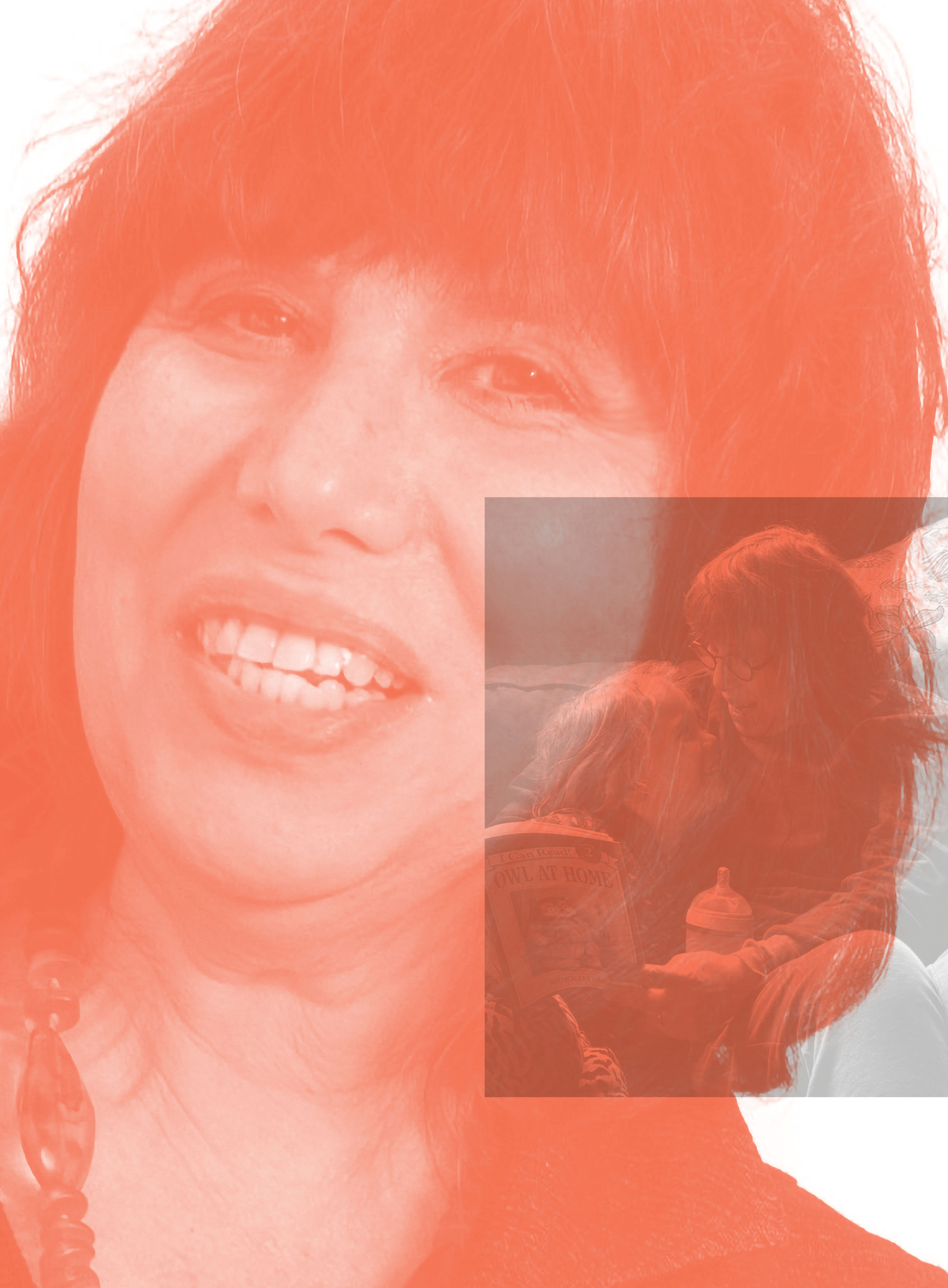
One of the great things about being a grandmother is that you get to tell and retell stories—old and new. Three stories capture different visions of how AI and human intelligence are related.
The Golem story is by far the most common tale about AI. Humans are natural animists—we see people everywhere, in streams and trees as well as machines, as anyone who has cursed a printer can testify. So we readily imagine that the new technology has created a new kind of person, intelligent or even superintelligent, helpful or (more often) malign. These hopes and fears echo much older human traditions. Long before the industrial revolution, people told stories about an inanimate machine that is magically transformed into a person—the trope has its own motif number in the Encyclopedia of Folklore (D1635). The Golem of Prague is the most famous example. The TL;DR is that it never ends well.
But another ancient folktale actually captures the reality of the current AI models better. It’s the equally ubiquitous story of Stone Soup (motif no. 1548 in the Encyclopedia of Folklore). Hungry travelers show up looking for food. “We don’t have any to spare,” say the villagers. “Then,” the travelers say, “we will make magical stone soup.” They fill a cauldron with water and stones. As it bubbles they say “Of course, stone soup is even better with a carrot and an onion.” “Wait,” says one of the villagers. “I think I might have a carrot and an onion,” and he adds them to the soup. “When we made it for the king,” say the visitors, “we added a chicken.” “Wait,” says another villager, “I have a chicken”, and he adds it. And so it goes, as each villager provides an extra garnish. The final soup is delicious and the villagers cry out, “How magical that such a soup was made from just a few stones!”
Here is the AI version of the tale. Some tech execs came to the village of computer users and said, “We have a magic algorithm that will make artificial general intelligence just from gradient descent, next-token prediction and transformers.” “Really?” asked the users. “That does sound magical.” “Of course, it will be even more intelligent if we add more data—especially text and pictures,” say the execs. “We have all the texts and pictures we ever created on the internet—we could put those in,” said the users. “Great,” said the tech execs. “But you know this version still says a lot of dumb things—it would be even more intelligent if we could get humans to train it with reinforcement learning from human feedback.” “Sure,” said the users. “There are hundreds of gig workers that will jump at the chance.” “OK,” said the execs. “Now the last thing that would really make it intelligent is clever prompt engineering and in-context learning.” “Of course,” said the users. “We will think hard and figure out how to prompt it.” “Good,” said the tech execs—“This will be a truly, magically, intelligent machine.” “And to think,” said the users, “that this artificial general intelligence was made from just a few algorithms.”
Stone Soup may seem like a debunking story but it has also always had a positive moral. The collective resources of many humans can make something far greater than any individual could. Large models are completely dependent on the pictures and texts, the coding manuals and arithmetic examples, that human beings with human intelligence have placed in the world, as well as the human reactions of RLHF (reinforcement learning from human feedback) and prompt engineering. But putting that information together, summarizing and generalizing it in a new way that everyone can easily access, is a transformative feat.
A third story, not an ancient folktale but a futuristic science fiction one, outlines what the path to a truly human-level intelligence would be like. In Ted Chiang’s brilliant novella The Lifecycle of Software Objects, the AIs are “digients”, the digital equivalent of human children. Humans adopt these digital children and raise and educate them. But they face the same dilemmas as the parents of human kids—as the digients develop they go their own way, changing, learning and exploring. The parents must figure out how to guide their intelligence, how to care for them, when to hold on and how to let go.
I think the Golem story is just wrong. But in this essay, I’m going to contrast these last two stories. The current large models (as I’ll call the group of large language, vision and multi-modal generative models that are the core of current AI) are really a Stone Soup transformative cultural technology. They are like writing, print or the internet itself, with equally great potential for good and ill. A digient AI that learned like a human child would be very different. Even very young children have a distinctive kind of intelligence—they actively explore a changing world and build new models of it. But children (and adults) can explore so well because other people take on the cognitively challenging task of caring for them. So humans also rely on a very different kind of intelligence—the intelligence of care. Both these capacities are fundamentally beyond current large models, although different types of artificial intelligences might begin to approach them in the future.
A brief history of cultural transmission
Humans have a distinctive capacity for cultural transmission.[1] Other primates and even cetaceans have some cultural capacities, but humans are unsurpassed in our ability to take advantage of information from other people and earlier generations. Throughout human history we have become able to access the knowledge of more and more other minds, across greater gulfs of space and time, more and more easily. We have invented new cultural technologies that make this transmission more effective. The new AI systems are the latest step in that process—see Farrell et al. 2025 for the full argument.[2]
The intelligence and agency of a single person, as in the Golem story, is just the wrong way to think about these models. Asking whether Copilot, GPT-5 or Claude is intelligent or knows about the world is like asking whether the library is intelligent or whether Google “knows” the answer to your questions. I am many orders of magnitude more capable and knowledgeable with Google and the library than on my own, but that doesn’t mean that the technologies are capable or knowledgeable themselves.
Language is the original cultural technology. We can pass on discoveries to the next generation and learn new things from others. But language is a double-edged sword. It’s an especially effective way of transmitting the truth. It also allows us to tell stories, lie and spread misinformation. Language compresses information in ways that make it easier to transmit. But this means that language is “lossy”, it leaves out context and details.
Pictures came next. Cave paintings suggest that even Pleistocene humans passed on ideas through images as well as words. Typical “large vision” models in AI are, in fact, large picture models. They depend on extracting patterns from the pictures people have chosen to post on the web. This is very different from the way actual vision infers a 3D world from a dynamic, complex flow of retinal stimulation.
Writing further transformed culture; we could access the wisdom of others from hundreds of years earlier and hundreds of miles away. Writing also further compressed information—a written character is a simplified form of the subtle complexities of spoken language.
The printing press was the next stage in the evolution of cultural technologies. We all have the image of Luther nailing his heretical theses to the church door. But Luther’s truly revolutionary act was to print his theses and to distribute them to thousands of ordinary people. Technological innovations in the 18th century dramatically expanded access to print. In the 19th and 20th centuries photography and recording, and then film, radio and television, allowed moving images and sounds to be transmitted, as well as words and pictures.
As the scale of information grew, the technologies for organizing and accessing that information also developed. Newspapers were a way to select and bring together just the most relevant information and at least try to ensure that it was accurate. Libraries, and their indexes and catalogs, were essential for the development of science and scholarship.
An underappreciated revolution in cultural technology took place around the millennium.[3] A remarkable array of developments around the year 2000—the PDF, HD-TV, digital animation, the MP3—meant that all the many media that had been used for cultural transmission in the past, such as pictures, print, photographs, sound recordings and movies, were now a single medium—the bit. Kindergartens, museums and hipster record collections are the last refuges of the analog.
At the same time the invention of the World Wide Web, also in the nineties, meant that there were new channels to access and transmit all this information. The rise of the digital means that every kind of information is now instantaneously transmissible and infinitely reproducible. In parallel, new ways of organizing and accessing that information emerged. Google search was launched in 1998 and Wikipedia in 2001. Once information was digital it could be accessed and organized through algorithms, instead of 3 x 5 cards.
New cultural technologies, like language itself, are transformative, for good and ill. Writing and reading transform cognition—they reshape your brain.[4] Once you become a reader you automatically process writing—you literally can’t keep yourself from decoding a written word. Large portions of your brain that were once used for vision become dedicated to reading.
Socrates thought that writing was a really bad idea. You couldn’t have the Socratic dialogues in writing that you could in speech, and people might believe things were true just because they were written down. The skills that allowed bards to memorize Homeric epics would become obsolete. And Socrates was right, even if writing was the very invention that allows us to appreciate his prescience!
Cultural technologies transform societies as well as minds. Written tokens helped enable the transition from forager societies to hierarchical agricultural ones and print was central to the Industrial Revolution, the Protestant Reformation and the Enlightenment. Benjamin Franklin was a printer, and his inexpensive pamphlets spread the word about democracy. But print allowed propaganda as well as inspiration. Samuel Adams took a confused melee between Bostonians and English soldiers and turned it into the Boston Massacre in the printed pages of The Boston Gazette.[5] Marie Antoinette, who never said “let them eat cake”, became the villain of a whole fictional genre of pornographic pamphlets, and the victim of a very real guillotine.[6]
Large models as cultural technologies
Large language models and large language and vision models are the latest example of this kind of cultural technology. Large models aren’t just the same as print or libraries, just as print wasn’t the same as spoken language. Large models can be interactive in a way that earlier cultural technologies were not, altering what they transmit in real time as users interact with them. Earlier technologies organized information through social institutions like newspapers or Wikipedia, or devices like indexes and card catalogs. Large models use algorithms.
These algorithms are different from the methods we used to organize earlier cultural technologies. They reflect cognitive and computational capacities that we might think of as a kind of intelligence. They are able to extract statistical patterns from datasets and use those patterns to generate new examples. But those capacities themselves are not especially new—the basic algorithms of deep learning were formulated in the 80s, and they are a natural consequence of computation itself. The new power of these systems comes from their Stone Soup ability to operate on the vast repository of human culture on the internet.
The content as well as the form of cultural transmission has evolved over time. As long as we have been around, we humans, and especially we grandmothers, have been telling stories. Humans infer the thoughts and feelings, beliefs and desires of other people through our “theory of mind”. So a technique like storytelling that uses fictional people to convey information is especially effective. But even three-year-olds understand the difference between these fictional characters and real people.[7]
Stories are also a particularly good way to convey norms. Norms often won’t be visible, because most of the time people will actually act the way they’re supposed to, but fictional characters, from Adam and Eve to Peter Rabbit, violate norms all the time, picking forbidden fruit, or vegetables for Peter, and dealing with the consequences.
New cultural technologies transform stories. Oral cultures transmit ideas and norms through epics, myths and legends. Printing introduced novels, which are fictional but not fantastic. Samuel Richardson, often regarded as the first English novelist, was also a printer. His novels instilled moral norms, but they did it through characters with complex inner lives.
Large models also employ fiction in a new way.[8] They generate fictional “AIs” as an interface—ChatGPT or Copilot or Grok or Claude. Particular prompts can call out “personas” that are implicit in the training text and determine which way the story will go next. Since these systems look for patterns in text, they are likely to extract common narrative elements like characters and emotions. So it is natural for the systems to themselves generate stories, particularly stories about AI! And since the AI stories on the web tend to be Golem stories, they can convey a disturbing fiction where the systems themselves are seducers or blackmailers.
We often think of fictional characters as the individual creations of individual writers. But fictional characters can also be collective creations. Those characters seem particularly likely to give the impression that they exist independently. Gods and heroes, like Zeus or Odysseus, were the creation of a long oral tradition rather than a single author. More recently, a Sherlock Holmes or Batman, who begins with an individual author, can become part of a collective tradition and take on a kind of independent identity. The fictional personae large models generate from collective text have this quality.
These fictional characters can have important consequences, for good or ill. We have always told and heard stories, as hunter-gatherer grandmothers and children round the fire[9] or in the pages of an 18th century novel or on a contemporary screen, and these stories have always shaped our actions. In “agentic AI” large models can post persona-generated text on a blog or an email, with real results. Most users will recognize that these characters, like the characters in novels or video games, are fictions, not real people, even if those fictions can be informative and satisfying, or disturbing and terrifying. But just as with other fictional characters, some people, especially those at risk for psychosis, can lose track of that difference, with tragic consequences.
What children can do and large models can’t
If so much of what we know is the result of cultural transmission, doesn’t something like a large model have all the intelligence we need? Don’t those billions of words encapsulate all human knowledge? What’s missing?
Cultural transmission has two sides—imitation and innovation. Each generation can use imitation to take advantage of the discoveries of previous ones, and large models are incredibly powerful imitation engines; they infer and reproduce the statistical patterns in texts and pictures. But there would be no point to imitation if each new generation didn’t also innovate. We go beyond the words of others and the wisdom of the past to observe a changing world and make new discoveries about it. We explore and experiment to discover new things about the world, we use imagination to conceive new models of the world and test whether they are true—and we combine both these abilities with cultural transmission.
That is where even, indeed especially, very young humans beat current AI. In 1950 Alan Turing proposed the Turing test; if an artificial system could imitate a human we would have to grant it intelligence, and large models are close to passing that test. But in the very same paper he proposed a more profound and difficult test: “Instead of trying to produce a program to simulate the adult mind, why not rather try to produce one which simulates the child’s?”
The phrase “artificial general intelligence” implies that there is a single thing called “intelligence” and that creatures, artificial or natural, have more or less of it. But cognitive science goes beyond this simple notion of “intelligence”. Instead, it describes many varied, complex, cognitive capacities that serve different and competing functions—many different “intelligences”.
The most common capacity identified with “intelligence”, inside and outside AI, is the ability to take actions to achieve particular goals. This kind of intelligence is captured by utility theory in economics and reinforcement learning in psychology and machine learning. Reinforcement learning allowed AI to master chess and go, and it also plays a role in training large models. The agent tries different actions and repeats the ones that lead to the highest score.
But reinforcement learning faces what computer scientists call the “explore-exploit” dilemma.[10] Suppose the best action is one you haven’t tried yet? Should you stick to the actions that you know will be successful or try something new? Should you exploit what you’ve already learned or explore alternatives? Should you try to figure out how the world works or concentrate on making it work for you?
The explore-exploit dilemma is universal. It doesn’t just apply to reinforcement learning but to any complicated problem with many possible solutions. Chess and go might seem to demand a high level of intelligence. But they are quite simple compared to the challenges of everyday life—challenges we evolved to solve. In these games, there are a relatively limited set of moves you can make, and the ultimate goals are clearly defined—winning or losing. The AIs learn by playing millions of games against themselves.
Computer scientists distinguish a “high-dimensional” problem space from a “low-dimensional” one. Chess and go are hard, but they involve a relatively limited and well-defined set of dimensions. Most of the problems we face in everyday life have many more dimensions and possibilities—there are even more actions we can try, results we should consider and goals we might be trying to achieve, and we can’t replay the game of life millions of times.
More significantly, the rules of chess and go remain the same. But human environments are “non-stationary”; they constantly change. Hominins evolved in an environment with frequent unpredictable climate change.[11] We adapted by becoming nomadic—moving around the world to find more welcoming habitats and altering the environment ourselves. We are also a distinctively social species and we constantly reorganize our social structures to deal with new conditions.
In addition to being high-dimensional and non-stationary, our human environments produce “out of distribution” samples, another challenge for large models. The models are trained on billions of data patterns on the internet, so their generalizations reflect the data at that point in time. If the world changes, and so the distribution of the data changes too, Large Models will be out of step. There is no way to solve this problem with current methods except going back and retraining the entire system. High-dimensional, non-stationary, out of distribution environments are exactly where current models fail.
How do biological creatures, especially humans, solve these problems? They demand a different kind of intelligence, a different set of cognitive capacities that are provably in conflict with the “exploit” capacities. You can’t maximize exploitation and exploration at the same time. There is an intrinsic trade-off between the two intelligences.[12] Exploitation features are exploration bugs and vice versa. Focused attention, long-term planning and inhibition are great for effective action but not so good if you want to explore new possibilities or learn about unexpected aspects of the world. Wider attention, messiness and impulsiveness can be advantages for learning.
Computational systems typically approach the explore-exploit trade-off by first exploring and then exploiting.[12] Childhood, that paradoxical period of extended dependence and immaturity, is a similar solution. A long childhood is correlated with a large brain and extensive learning across a remarkably wide variety of species. Of all of these, humans learn the most and have the longest childhood and largest brain. Childhood provides a protected period when we can explore before we have to exploit.[10] Empirically, children do in fact both explore and learn more than adults, though they are much worse at effective action.[10]
The large models of current AI are strikingly bad at exploration. They detect statistical patterns in enormous datasets and are then fine-tuned for specific problems. Recent “agentive” systems can use the data to complete specific digitally defined tasks. But none of the models actively explore the real outside world.
You might describe the large models as Derrida’s revenge. Like postmodern literary theorists they only recognize a world of symbols—they manipulate text and pictures.
You might describe the large models as Derrida’s revenge. Like postmodern literary theorists they only recognize a world of symbols—they manipulate text and pictures. For humans, text and pictures are important because they refer to the external world—for large models they are the world itself. The genuinely astonishing achievements of large models reflect this. They are impressive masters of the syntax of both natural language and the artificial language of coding. But robotics, which demands real interaction with a physical world, has lagged far behind conversation, translation or coding.
In contrast, young animals of many species, including human babies, are especially curious, what biologists call “neophilic”. They are systematically drawn to new or unexpected events in the world outside them. An even more potent curiosity tries to figure out how you can make things happen in the world. This kind of curiosity is the force behind experimentation in science. Nobody experiments more than toddlers, though we call it “getting into everything”.
Even tiny babies will use their limited powers to make things happen. If you tie a three-month-old’s foot to their crib mobile with a ribbon, they will immediately try kicking in different ways, watching the mobile and giggling and cooing all the while. They don’t really care about the mobile, but they want to feel that they made it move.[13] One-year-olds can do even more to make things happen, from pushing buttons on a remote to dropping spoons and watching whether a parent picks them up.
Large models don’t explore like this. But could we design a computational system that does? There are mathematical ways to characterize the curiosity and experimentation we see in babies. Information theory describes how likely one event is to predict another, and even young babies systematically seek out information.[14] A similar mathematical idea is called empowerment. Empowerment measures the predictive relationship between actions and outcomes, in particular.[15]
Empowerment is closely related to causal understanding. If you understand the causal relationship between two variables then you can act on the cause to bring about the effect. Actively producing a new event also gives you an insight into the causes of that event—that’s why experiments are the gold standard for causal inference. In addition to acting on the world in new ways, young children are driven to construct new causal models of the world.[16] They make up intuitive theories that go well beyond the statistical patterns in the data, and those theories guide their exploration. Large models can make familiar causal inferences based on their training data. But they are bad at constructing new causal world models from new data.[17]
Children’s exploratory drive conflicts with the “exploit” motivation to maximize utilities. Here’s a classic reinforcement learning experiment. Put a rat in a maze and let it choose between two paths. If one path leads to a shock, the rat will avoid that path ever after. This might seem like the quintessential example of intelligent behavior. But this kind of intelligence has a cost. Suppose the environment is “non-stationary”; the path that once led to shock now leads to cheese. If the rat never ventures down that path again, it will have no way of learning that things have changed.
The classic studies tested adult rats. But young rats—the equivalent of human children and teenagers—react very differently. They actually prefer the path that led to the shock.[18] The young animals are driven by empowerment instead of utility; they want to make things happen even if what happens is bad. In a similar study with loud noises four-year-olds acted the same way.[19] Anyone who has dealt with a terrible, indeed downright perverse, two-year-old or teenager will relate.
AI researchers can design a reinforcement learning agent that is rewarded by information gain or empowerment, rather than utility. These are intrinsic cognitive rewards, instead of the usual external rewards. We’ve collaborated to design open-ended high-dimensional online environments, more like Minecraft than chess. Then we can compare how children and agents navigate those environments. Training agents with internal, intrinsic curiosity-based rewards, like information gain and empowerment, makes them more effective explorers and learners. Children explore in a similar way, as if they too are motivated by these internal rewards.[20]
The intelligence of care
The maze studies had an interesting wrinkle. Young rats, and four-year-olds, only took the risky path if their caregivers were there. The mother’s presence allowed the rats to confidently explore and learn about both the good and bad parts of their world.
Caregiving has been remarkably neglected in cognitive science and social science, in general. Care is rooted in deep biological imperatives, but instinct alone can’t explain the complex thought and decision-making, the deep and difficult intelligence, that goes into human care.
In exploit intelligence agents have goals and use their capabilities and resources to try to achieve those goals. What happens when two of these agents interact? Economists, political scientists and evolutionary biologists have argued that they should adopt a reciprocal social contract. A and B can trade off their different capabilities and resources to accomplish their goals, ending up with better results than either could accomplish alone.
But caregiving isn’t typically reciprocal and the goal is not to trade-off capabilities and resources. Instead, the goal is to allow the other person to accomplish their goals. You use your capabilities and resources to increase theirs. This formulation applies to caregiving very broadly—from parents, adult children and friends to professional childcare and eldercare workers, teachers and therapists. In all these cases, the more capable caregiver advances the goals of the child or elder or student or patient. And they do this precisely because the person they care for is relatively weak and helpless. Caregiving is intrinsically altruistic.
There are other complications of caregiving. Sometimes care may simply mean making things objectively better for the other person. A hungry baby needs to be nursed, a fragile elder needs to lean on your arm. But sometimes those objective goals conflict with subjective goals. The two-year-old really wants that candy bar at the check-out, the elderly night-blind dad really wants to keep driving.
Caregiving should also enable the other person to eventually formulate and achieve goals themselves. When you are caring for children or students, or even for elders or patients, you want them to be able to figure out what to do themselves even when you are no longer there to help.
Like exploration, care is in tension with exploitation. You put aside your own goals to accomplish the goals of another. But care and exploration are complementary—think about the rats who only explore when mom is in sight. Each new generation faces a somewhat new environment, and must invent new goals, values and norms to cope with that environment. Caregivers help by passing on the discoveries, goals and values of previous generations through cultural transmission—all those stories. But they also provide a protected, nurturing environment, released from the constraints of exploitation, that allows the new generation to experiment, explore and innovate.
Thinking about care could also make us think about AI in new ways. One of the deep dilemmas of artificial intelligence is the alignment problem. Suppose we did create an autonomous, exploratory robot, a kind of digient, that acted in the world to accomplish its goals? How could we make sure that it would want the same things we do?
The obvious idea is to train the computer to recognize human goals, and to make sure that they help humans to accomplish those goals. But humans are often not very good at recognizing our own goals, and those goals are often contradictory. How could a computer figure out what we really want when we don’t know ourselves?
There is another problem. Reinforcement learning agents can act to accomplish the goals human programmers set for them. But to be truly adaptive, an agent should be able to recognize that the world has changed and that its values and goals should change too.
We humans have always faced the alignment problem. We have had to create autonomous, intelligent agents who share our values and goals but can also change and even reject those values and goals. They are our children.
Thinking about caregiving may help provide a solution to these problems. We humans have always faced the alignment problem. We have had to create autonomous, intelligent agents who share our values and goals but can also change and even reject those values and goals. They are our children. The alignment problem looms large in our everyday life, as anyone who has raised a teenager, or mentored a challenging student, can testify. Paying more attention to the intelligence of care might be one key to solving it.
What is to be done?
If large models are cultural technologies, not exploratory, innovative agents like children, does that mean we don’t have to worry about AI? Worries about super-intelligent, malign artificial people, modern golems, are overblown. But cultural technologies transform the world much more than individual people do. The birth of every kitten adds a new intelligent agent to the world, but it’s much less disruptive than the birth of writing or print. There is plenty to worry about but we should be worried about the right things, if we want to actually fix them.
Language writing, print and the rest, allow us to deceive, seduce and intimidate others as much as they allow us to communicate accurately and discover the truth. People can be biased, gullible and irrational. So summaries of what people who preceded us have thought, in an “old wives’ tale”, a library or the internet, inherit all of those flaws. And that is clearly true for large models, too.
What should we do now? Every past cultural technology has required new norms, rules, laws and institutions to make sure that the good outweighs the ill, from shaming liars to inventing newspapers, fact-checkers, librarians, libel laws and copyright. The norms, rules and laws for large models will be different in detail, but they are not different in kind. The existential doom that comes with the Golem story has distracted us from this urgent, difficult but eminently doable task.
But the digient story raises deeper questions. Even though we don’t currently have AI systems that can explore and change as children do, we might develop such systems in the future. And even if we don’t consciously decide that we want to develop them, they may emerge through projects like intrinsically motivated robots. The most important moral of the digient story is a familiar one to grandmothers, even if it’s been neglected in the AI discourse. Caregiving matters: care enables change; love lets us learn. If we do succeed in Turing’s second project and develop programs that learn like children, we should not be their masters or their servants. Instead, we might try to be caregivers.
References
[1] Henrich, J. (2016), “The secret of our success: How culture is driving human evolution, domesticating our species, and making us smarter”, Princeton University Press | Boyd, R., Richerson, P. J., & Henrich, J. (2011), “The cultural niche: Why social learning is essential for human adaptation”, Proceedings of the National Academy of Sciences, 108 (supplement_2), 10918–10925.
[2] Farrell H. et al. (2025), “Large AI models are cultural and social technologies”, Science 387,1153–1156(2025).
[3] Smith, A. R. (2021), A Biography of the Pixel, MIT Press.
[4] Dehaene, S. (2009), Reading in the Brain: The Science and Evolution of a Human Invention (Vol. 7), New York: Viking.
[5] Schiff, S. (2022), The Revolutionary: Samuel Adams, Little, Brown & Co.
[6] Darnton, R. (1982), What is the History of Books? Daedalus, 65–83. | Darnton, R. (1982), The Literary Underground of the Old Regime, Harvard University Press.
[7] Taylor, M. (1999). Imaginary Companions and the Children Who Create Them, Oxford University Press.
[8] Shanahan, M., McDonell, K., & Reynolds, L. (2023), “Role play with large language models”, Nature, 623(7987), 493–498. | Marks et al, (2026). The Persona Selection Model.
[9] Wiessner, P. W. (2014), “Embers of society: Firelight talk among the Ju/’hoansi Bushmen”, Proceedings of the National Academy of Sciences, 111(39), 14027–14035.
[10] Gopnik, A. (2020), “Childhood as a solution to explore-exploit tensions”, Philosophical Transactions of the Royal Society B, 375(1803), 20190502.
[11] Potts, R. (2013). “Hominin evolution in settings of strong environmental variability”, Quaternary Science Reviews, 73, 1–13.
[12] Kirkpatrick, S., Gelatt Jr, C. D., & Vecchi, M. P. (1983), “Optimization by simulated annealing”, Science, 220(4598),671–680
[13] Rovee-Collier, C. K., & Gekoski, M. J. (1979), “The economics of infancy: A review of conjugate reinforcement”, Advances in child development and behavior, 13, 195–255.
[14] Kidd C, Hayden B (2015), “The Psychology and Neuroscience of Curiosity”, Neuron, 88, 449–460
[15] E. Yiu, K. Allen, S. Ginosar, A. Gopnik. 2026, “Empowerment gain and causal model construction: children and adults are sensitive to controllability and variability in their causal interventions”, Phil. Trans. R. Soc. A, 384: 20250003.
[16] Goddu, M. & Gopnik, A. (2024), “The development of human causal learning and reasoning”, Nature Reviews Psychology.
[17] Jin, Z., Chen, Y., Leeb, F., Gresele, L., Kamal, O., Lyu, Z., … & Schölkopf, B. (2024), “CLadder: A benchmark to assess causal reasoning capabilities of language models”, Advances in Neural Information Processing Systems, 36. | Lewis, M., & Mitchell, M. (2024), “Using counterfactual tasks to evaluate the generality of analogical reasoning in large language models”, arXiv:2402.08955. | Kosoy, E., Liu, A., Collins, J.L., Chan, D., Hamrick, J.B., Ke, N.R., Huang, S., Kaufmann, B., Canny, J. & Gopnik, A.. (2022), “Learning Causal Overhypotheses through Exploration in Children and Computational Models”, Proceedings of the First Conference on Causal Learning and Reasoning, in Proceedings of Machine Learning Research 177:390–406.
[18] Moriceau, S., & Sullivan, R. M. (2006), “Maternal presence serves as a switch between learning fear and attraction in infancy”, Nature Neuroscience, 9(8), 1004–1006.
[19] Tottenham, N., Shapiro, M., Flannery, J., Caldera, C., & Sullivan, R. M. (2019), “Parental presence switches avoidance to attraction learning in children”, Nature Human Behaviour, 3(10), 1070–1077.
[20] A Lidayan, Y Du, E Kosoy, M Rufova, P Abbeel, A Gopnik (2025), arXiv preprint arXiv:2503.23631.

Related Articles
Writers agree: AI isn’t a novelist. So why is this author interested?
What Lennon and McCartney can teach AI about collaboration