The challenges of more and less
For the last 250 years, since the first stirrings of the Industrial Revolution, we’ve had more of almost everything you can imagine: clothes, energy, machines, travel, pins, food, books and forms of entertainment. The defining theme of the intervening years is “more”. Compared with the life of someone growing up at the start of the 20th century, let alone someone living 2,000 years ago, our world is extraordinary. Medicines that alleviate pain and disease; supermarket shelves groaning with produce from around the world; all the music, film and literature ever produced, available at the touch of a few buttons. Despite all the many problems and pressures of the modern world, we take abundance for granted.
With AI, it’s plausible that we’re embarking on the next phase of this journey. If the Industrial Revolution made energy and machine strength plentiful, and the computer and internet revolutions did the same for information, we’re now making intelligence abundant. As in previous centuries, this will bring about a wave of positive impacts, but with a twist: every form of abundance creates new problems, new scarcities.
I’m cautiously optimistic. Previous generations left us with a legacy of improved living standards; I believe AI can do that again. So much lies downstream of intelligence. Whether it’s the best way of designing a product or the know-how to extract a novel form of clean energy, intelligence can help unlock it. Abundance needn’t be an airy word—it can just mean better ways of doing things that themselves lead to efficiencies or surpluses.
Conversations at the frontier, in your inbox
SubscribeBut I am also nervous. Abundance has a shadow. There are costs and new points of scarcity in place of the old. Contributors to this second issue of The Humanist Review of AI identify many of them: we face shortages of time and attention, trust and fairness, energy and minerals, security, resilience and shared understanding. These are all critical parts of a well-functioning society. We’ll need to carefully guard and nurture each of them even as growth accelerates and intelligence diffuses everywhere.
It’s this tension—what becomes common, what grows scarce—that I wanted to interrogate in this issue.
Both abundance and scarcity can be choices.
We are here to stress-test the abundance thesis. Many of the contributors disagree or at least bring a skeptical lens to bear. Nor are we just thinking about abundance and scarcity in economic terms, significant as they are. Sure, AI is a productivity booster. But productivity for what? For whom, and why? Two of our contributors look at what AI could do to GDP and both argue that this one metric misses something important. In one view, it understates the gains; in the other, it overlooks the costs. Either way, the deepest questions lie beyond the surface, beyond production and productivity. There’s a rich world of experience, culture and values affected by this technology. I was also keen that we explore how these are connected; how, for example, an abundance of entertainment brings about a shortage of attention. The contributors here range from venture capitalists to composers, writers to economists, entrepreneurs to campaigners. They often disagree with each other, and with my own views. But if there’s a theme that unites them, it’s that the technology itself will not and should not dictate what becomes scarce and what becomes abundant… All-too-human choices and decisions, from individual interactions to international law, will play an important role too. Both abundance and scarcity can be choices.
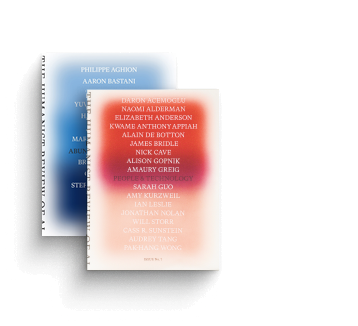
The issue is divided into three movements. The first is around the idea of plenty—what becomes possible when intelligence is everywhere and who is best placed to use it.
Just because the gains don’t appear in the GDP statistics doesn’t mean they aren’t real.
The first essay comes from Y Combinator’s Garry Tan. It looks at how fast and easy it is to go from concept to working product now. In his spare time, Garry rebuilt products that previously needed years, a large team and tens of millions of dollars to complete. Action today is easy. This new capability puts a fresh onus on founders: judgment, taste and knowing what should (not what could) exist are key. Economist Tyler Cowen looks at AI’s hidden dividend. We miss so much that’s actually valuable about the technology. No one is yet recording the additional free time or the millions of people finding new products, experiences, and money-saving tricks. Just because the gains don’t appear in the GDP statistics doesn’t mean they aren’t real. Nobel Prize winner Philippe Aghion, meanwhile, has studied how creative destruction powers economic growth. He is fascinated by what happens when AI can automate the production of ideas. The results are uncertain, but he advocates for a new Danish-style “flexicurity” system to help cushion a new wave of creative destruction.
Then I sit down for a conversation with the historian Yuval Noah Harari, a friend and someone I deeply admire. He has a unique ability to understand long-term patterns and communicate what they mean with a visceral intensity. We cordially disagree on a lot, and that comes through in the transcript. What we share is a sense of the importance of the moment. It was a genuinely great discussion. As well as reading sections here, you can watch the whole thing online.
Movement two takes us to paradox, the contradictions and strange nature of both abundance and scarcity. Why do these concepts so often exist side by side—not just in the economy, but in psychology, art and language?
Harvard economist Stefanie Stantcheva looks at public acceptance of AI. It will, she argues, depend on perceptions of fairness, different lived experiences and appropriate compensation for those who lose out. What happens at the national level is far less important than individual impact. Curiously her research shows that those who use AI the most are both the most optimistic and the most pro-regulation. Writer Ken Liu shifts gears with a beautiful meditation on art in the age of AI. How do we find and ensure meaning in art when it can be produced ad infinitum? Where is the value in what AI churns out? His answer is unexpected and revelatory, finding inspiration in Chinese “scholar’s rocks”—found objects we nonetheless imbue with meaning. Poet Sasha Stiles supports the point. Poetry was always a way of compressing meaning. Why don’t we use AI to further and deepen that process? The journalist and writer Aaron Bastani argues that the last 250 years of wealth creation have, paradoxically, made us less resilient. AGI, he thinks, could do the same, increasing inequality in an unsustainable way, for example. But there’s also a hopeful edge here—if AI can deliver abundance, it can also make us more resilient at the same time.
Who shapes, owns and shares in AI’s abundance?
The last movement looks at power. Who shapes, owns and shares in AI’s abundance? What rules, norms and institutions will be needed to spread it fairly? It opens with Mariana Mazzucato’s critique of the AI economy. There is much, she argues, that is extractive here. The problem is too few conditions and restrictions, not too many. She wants governments to proactively shape markets and the AI buildout. Brendan McCord of the Cosmos Institute asks what happens when advice is unlimited and, in many ways, better than our own. Does it wear down our discernment, our capacity to live and think for ourselves? He wants supporting human judgment to be an explicit goal of model behavior—something I absolutely endorse.
Guy Standing has spent many years making the case for a “basic income”. Here he compresses reams of research into a crisp argument for how and why AI could lead to a new social settlement often discussed but much misunderstood. Lastly comes the composer Holly Herndon. She too notes the infinite nature of media in a post-generative world. But what becomes scarce is taking part in shared experiences. Artists will move upstream to design rules and bring people and AI into them to create something new. She highlights some extraordinary projects including a human-AI choir and parliament.
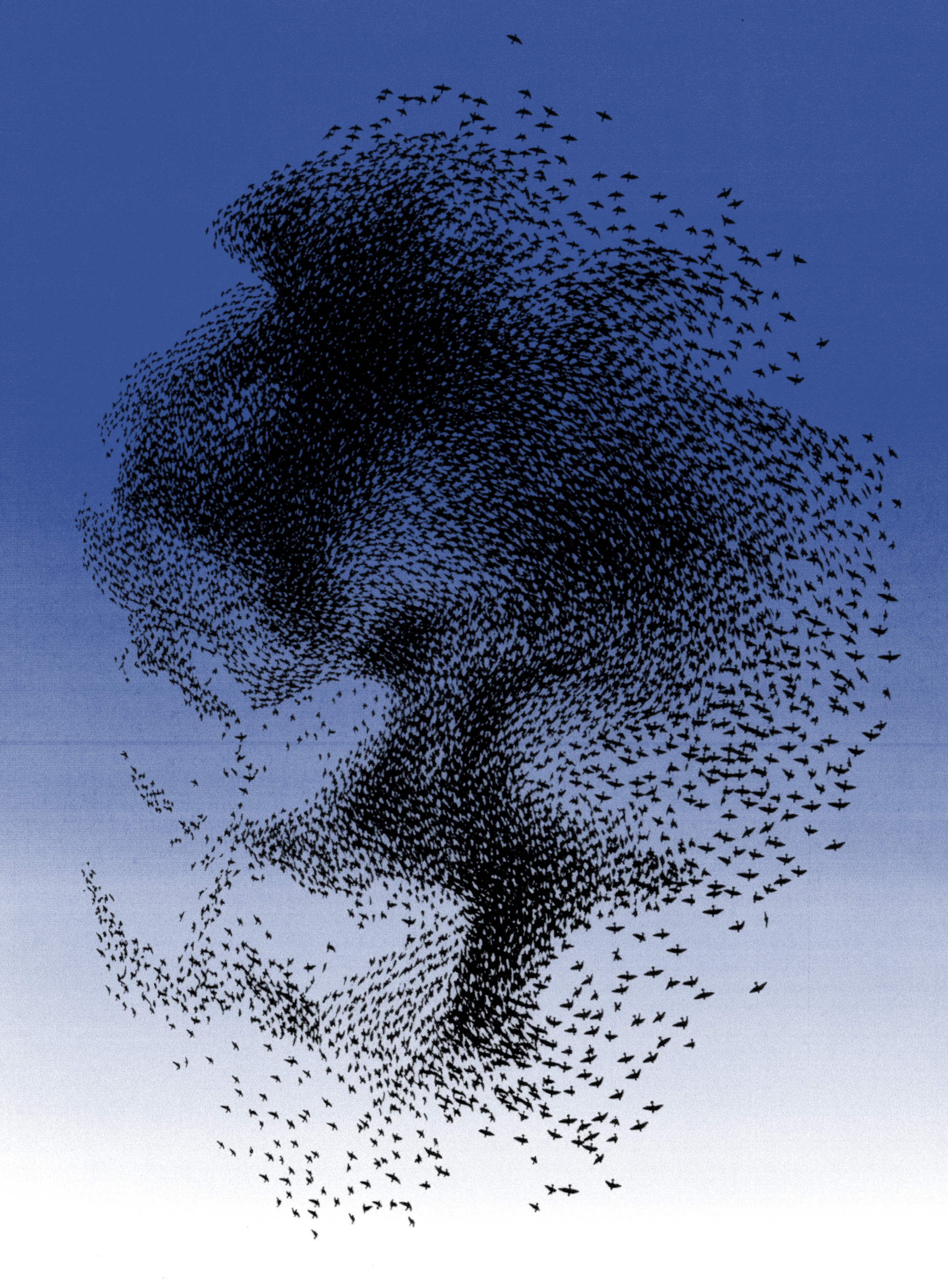
You’ll notice a lot of blue in this issue. We chose it as the signature color because it is the most abundant color on Earth, the color of the sea and the sky. And yet for most history it was the rarest and most expensive pigment, the hardest paint to produce. It is the color of both abundance and scarcity.
I hope you enjoy the Review. Let us know what you think.