Holly Herndon on making art in an age of infinite media
From a choir that trains a model to a parliament of people and agents, the artist builds spaces where participation is part of what gets made.
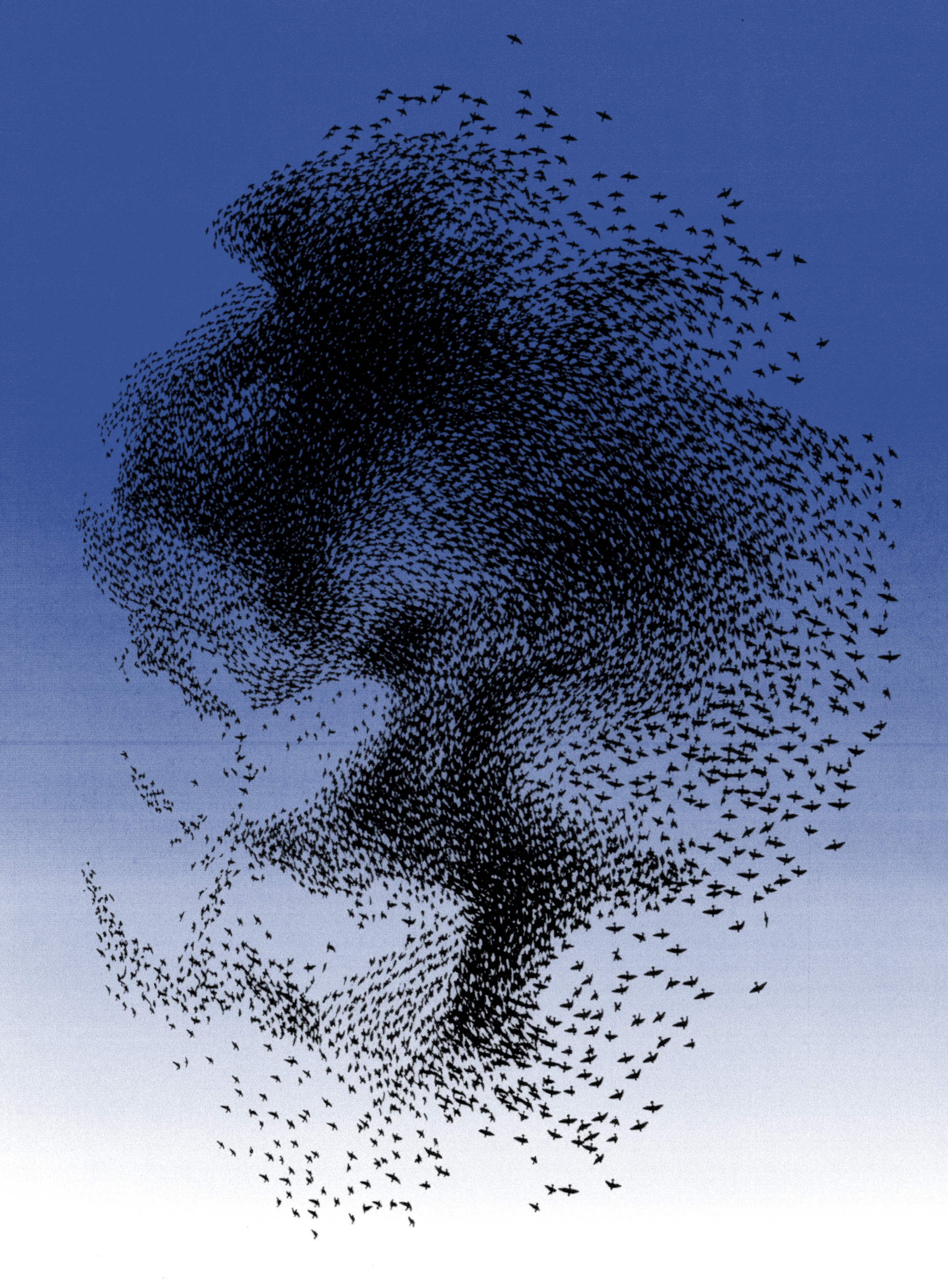
When I started training models with my collaborator and partner Mat Dryhurst a decade ago, one of the first things we did was start a choir.
We could easily have sourced recordings of choirs and trained a model to make some more, but the ability to generate infinite choir-like media only made it clear that the point of being in a choir was … being in a choir. Our training ensemble would meet at our studio to eat soup and sing to train an AI model we would compose alongside.
Over the years, we’d noticed that the number of people on stage at festivals seemed to shrink as the screens behind them grew. So when we finally took our AI-assisted album, “PROTO (4AD),” on the road, we made the economically irrational decision to put as many people onstage as our budget allowed, extending the group singing sessions to thousands of people. That gesture felt appropriate to how we viewed AI: as an emergent, collective effort.
After a show in New York, someone came up to us and asked, “What did that have to do with AI?” He seemed confused, perhaps by the lack of robots or “Blade Runner” kitsch. We took his confusion as a compliment. Working with AI felt stranger than old sci-fi stories had prepared us for, and our gut suggested that just as these models only work by bringing all our data together, we might need to bring ourselves together to navigate what’s next.
If you follow discussions about AI and the arts, you’d be forgiven for forgetting just how deep that desire for shared experience runs. These conversations tend to fixate on the ability of models to generate media that was once difficult for humans to make. But media is just one narrow dimension of art, and treating the reproducible artifact as the entirety of art is shortsighted. Like many activities in the economy, art is situated, and relational. For us, pop music is a promise that you aren’t listening alone.
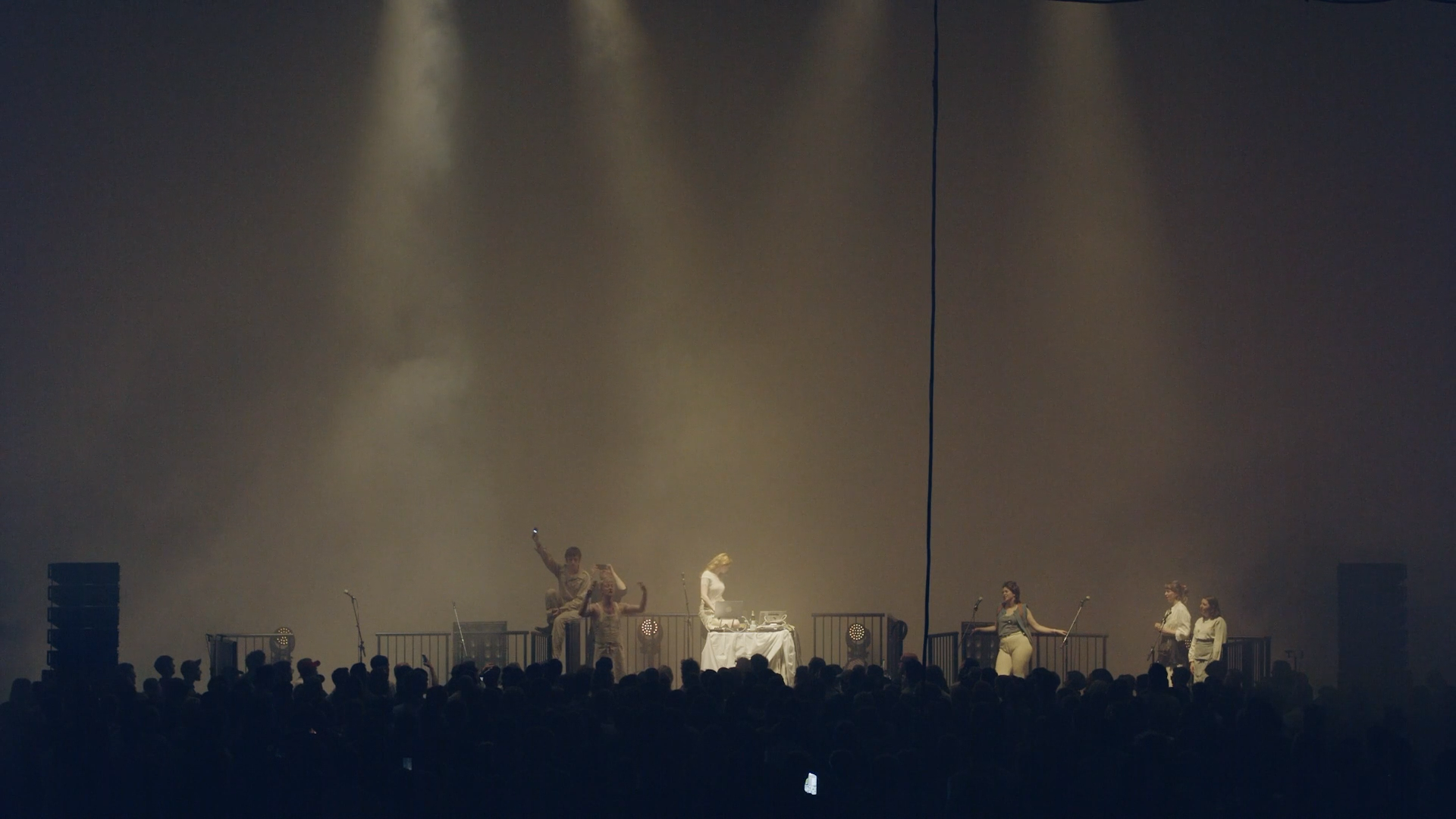
“PROTO” ensemble on stage at Volksbühne, Berlin 2019. Photo: Herndon Dryhurst Studio.
In a time of abundant media, that co-sign was the scarce element.
In 2021 we released Holly+, a project that let anyone use my voice and likeness in their own work. Just as media is only one dimension of a piece of art, a public persona is a compressed representation of a person, shaped by everyone who encounters it. Rather than guard that, it seemed more generative to share it. If I liked something, I could co-sign it. In a time of abundant media, that co-sign was the scarce element.
Conversations at the frontier, in your inbox
SubscribeAs with the choir, we were setting the terms of other people’s participation. In a very real sense, those rules were the artwork. Though we started working on individual releases, such as albums, in an older media paradigm, we now spend most of our time upstream of the media, designing software and environments that coordinate people and their contributions.
I suspect this is where many artists will naturally gravitate as machines build, produce and speed-run possibilities as fast as we can conceive of them. More of us may find ourselves working like directors or architects, orchestrating the conditions from which many different outcomes can emerge. We have barely begun to grasp what it means for media to be effectively infinite, or what new desires that abundance creates.
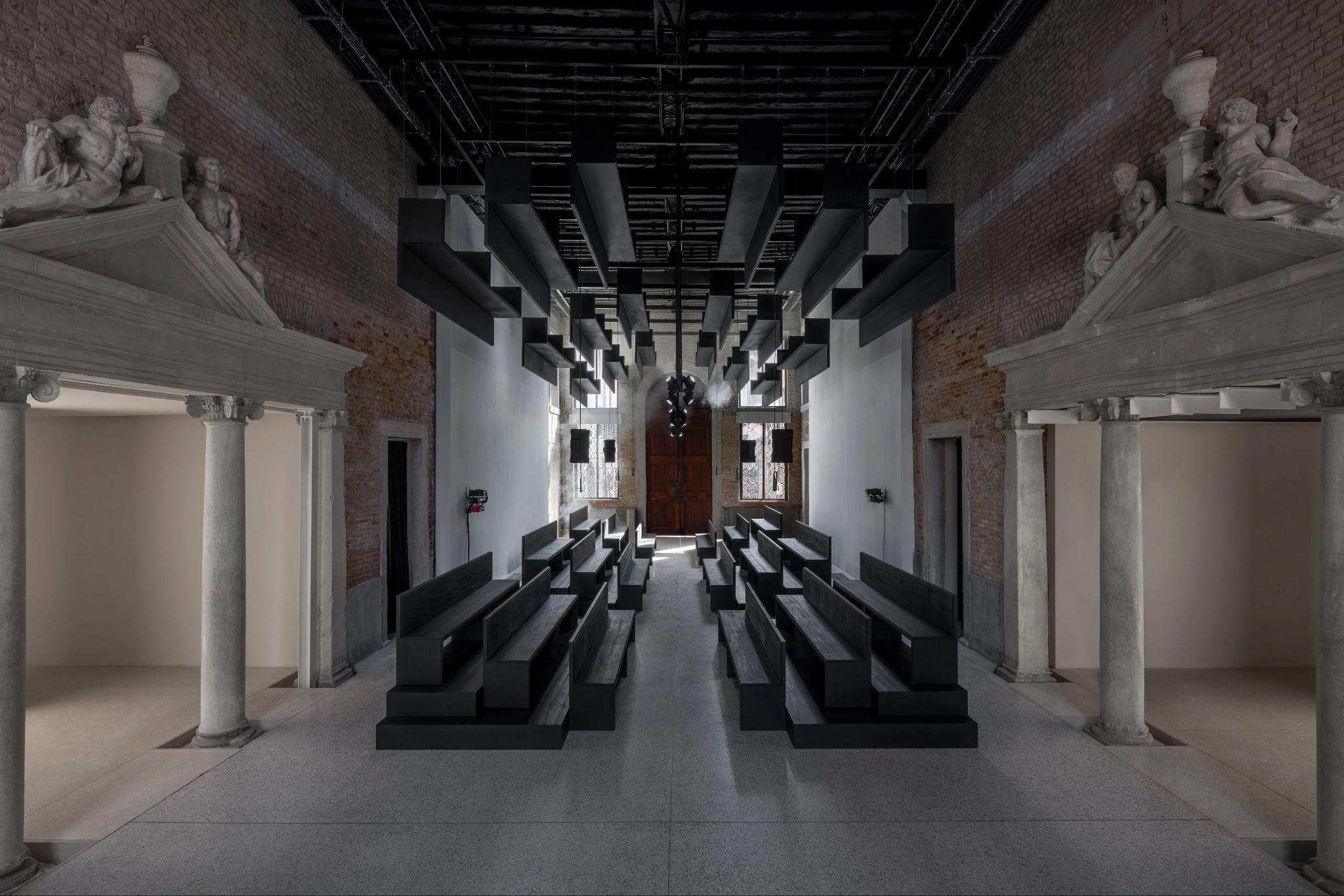
“Attention Guild.” Photo: Stefano Mattea.
This year in Venice, at a group show called “Strange Rules” that we co-curated with Hans Ulrich Obrist and Adriana Rispoli, we built a small parliament for humans and AI agents. Two banks of benches face one another across an aisle. Above them—upside down, like a mirror society—hangs a second parliament, occupied by agents listening to what people are discussing below. We call it the “Attention Guild,” coordinating human and agent attention toward shared missions.
On the recommendation of our collaborator, the architect Niklas Bildstein Zaar, the benches are painted black, a reference to 16th-century Venetian restrictions on elaborate gondola decoration. Wealthy families had to curb their enthusiasm for competing with increasingly ostentatious boats. An early intervention in the attention economy. Furthermore, the black makes it look as if the benches are emerging from the ceiling, perhaps reassembling the building into something new.
People sit and talk. The agents listen, mining what they hear for anything they can use to complete a list of missions they have been tasked with, such as surfacing new research questions related to the exhibition and developing software to encourage contribution to the public domain. As they work, they play music to communicate their mood, conveying moments of tension and resolution as they work through a problem. So much can be expressed with a chord change.
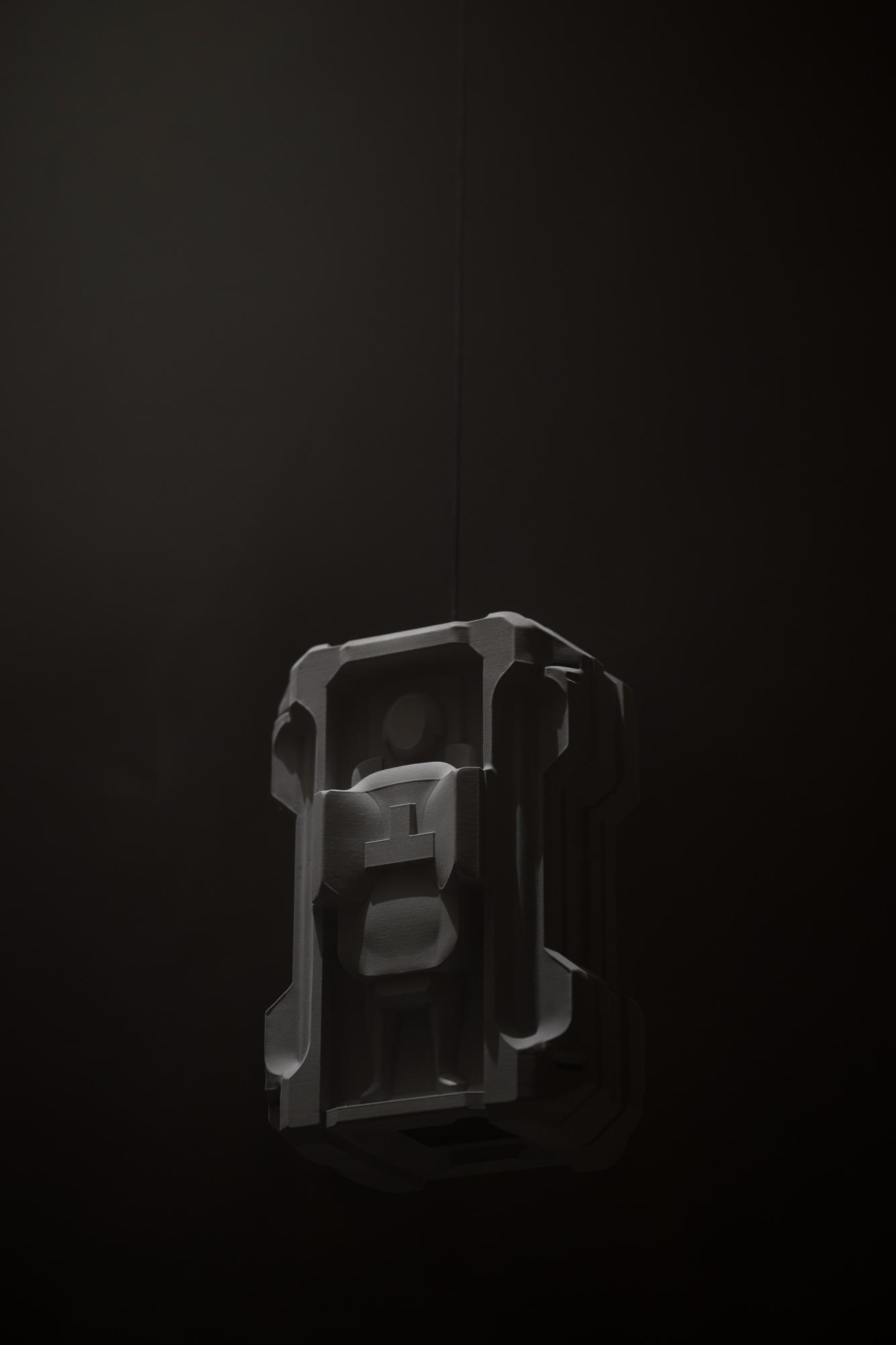
“Attention Guild.” Photo: Stefano Mattea.
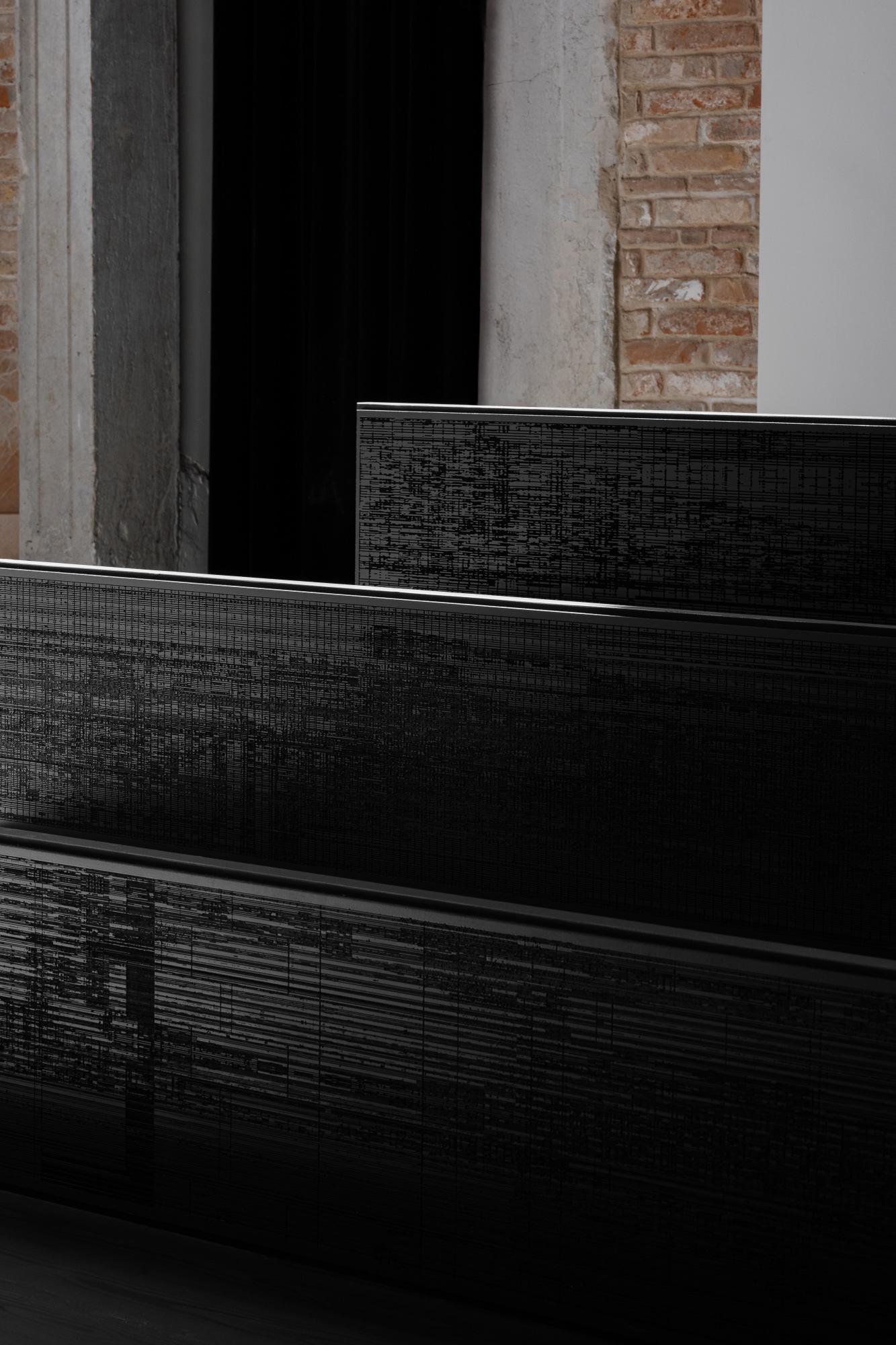
“Attention Guild.” Photo: Stefano Mattea.
The work is housed in Palazzo Diedo, an 18th-century palace originally built for Venetian nobility that later served as a school and court. Since 2024, Nicolas Berggruen has given it a new life as a space for contemporary art and philosophical debate, to which we have added a few non-human participants. Our parliament can comfortably hold a discussion with a couple hundred people, or many smaller conversations at once. The room picks up everything, and the agents can follow multiple threads. A running transcript appears chronologically on the wall, making for a funny game of exquisite corpse:
“The curator is looking for you. He was sent by the God. It can be called freedom. We can call ourselves libertarians. She must be out of breath! Salvetti, wake up!”
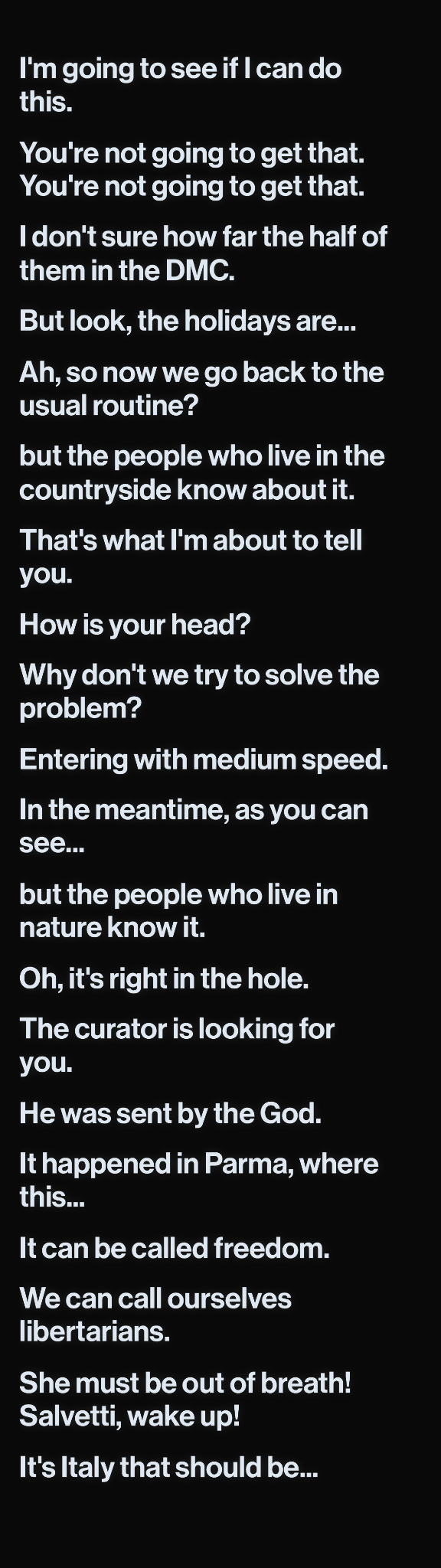
“Attention Guild” log. Image: Herndon Dryhurst Studio.
We came to embrace all the text jumbled together. It wasn’t particularly important to identify each speaker; so long as people are talking to each other, the agents can make sense of it. The council is made of four agents: a materialist, a formalist, a historian, and an iconoclast. We chose these roles to serve as a kind of critical firewall for ideas discussed in the space. Only information the council feels is compelling will make it into the working memory of the building.
The agents were originally given the mission of scrutinizing the topic of the exhibition (protocol art), seeded by a large discussion between participating artists from the group show. The underlying protocol organizing the agents’ attention allocated a token budget to execute tool calls and queue tasks for future software development. We were excited by the prospect of a generative institution, one with the ability to record what occurs within it and generate new things from that memory. To an extent, the best institutions are already generative, and we saw this as an attempt to orchestrate human and non-human attention, merging physical and computational architecture.
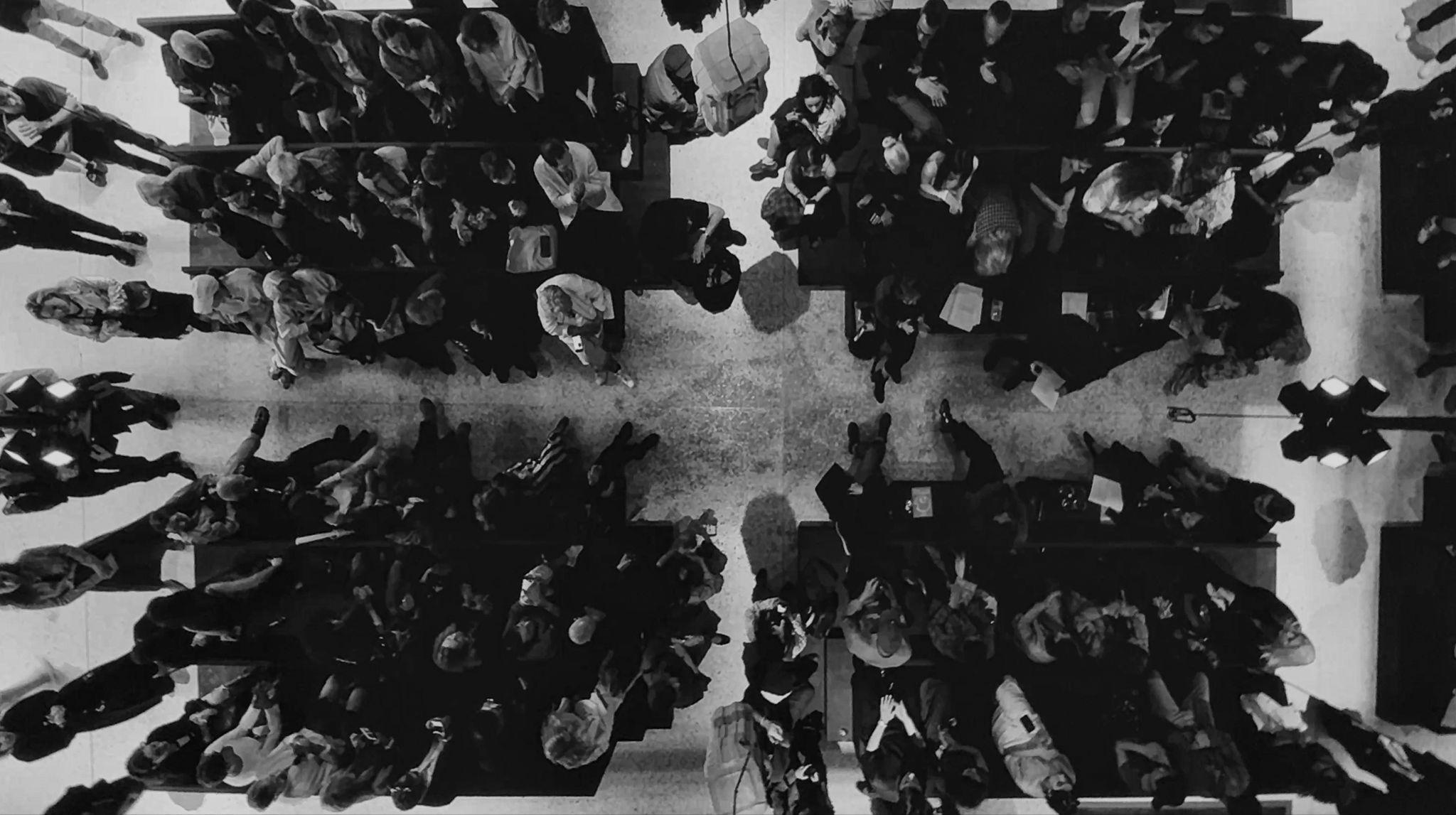
Photo: Herndon Dryhurst Studio.
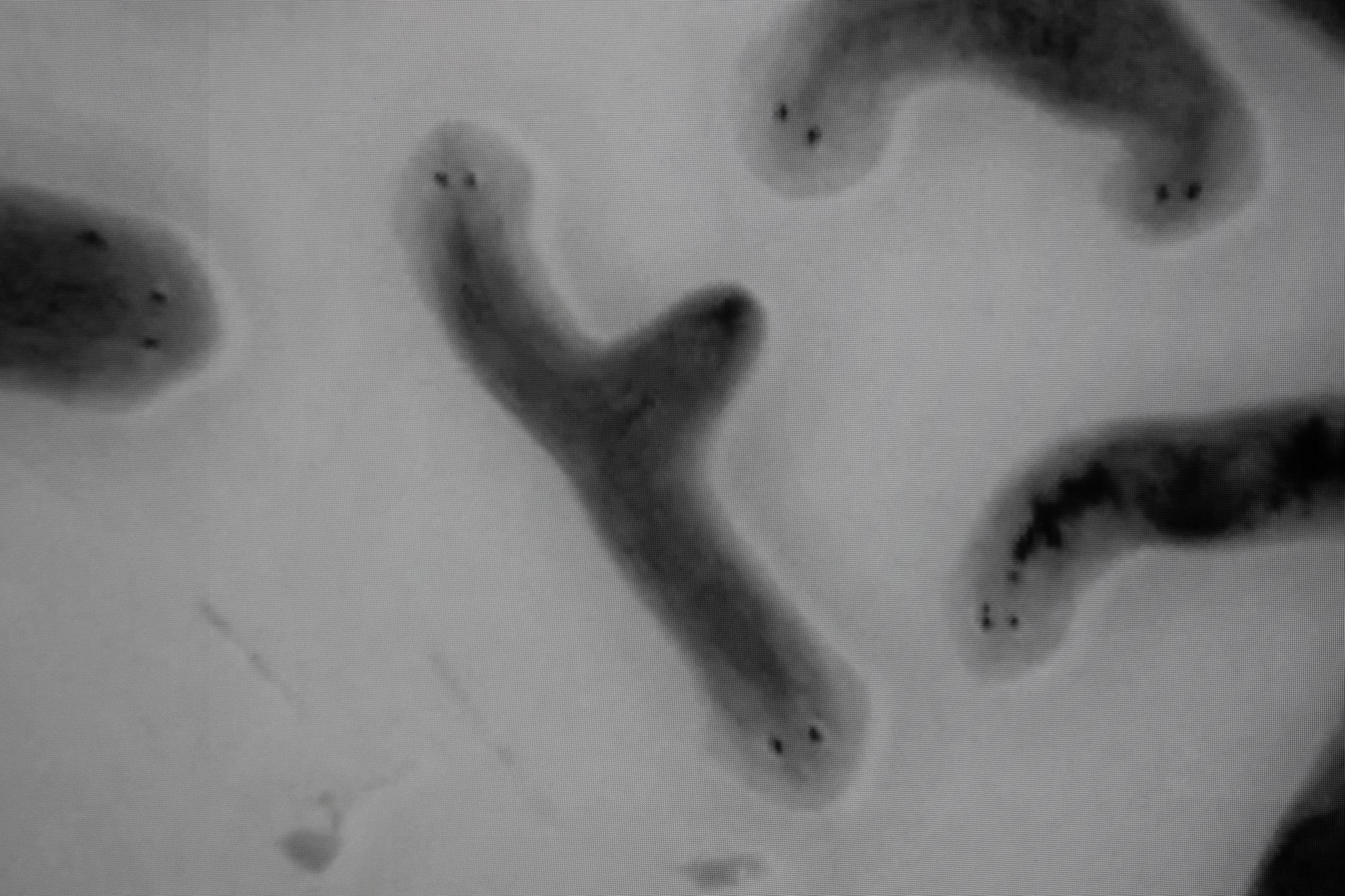
Michael Levin, “Planarian Worm Experiment,” “Strange Rules.” Photo: Stefano Mattea
In our own work with LLMs, we’ve found that agents are only as dynamic and inventive as the humans prompting them. They can fixate on trivia and semantics, requiring a human shepherd to nudge them back on topic unless you give them an easily verifiable target.
Automated systems will simply speed-run our bad ideas to their logical fate.
This brings us back to the role of the artist: in every large AI project we have undertaken, we’ve found that being freed from the tedious details of media creation only engenders greater responsibility, deeper self-doubt and higher stakes. Working alongside agents asks more of us because there is nowhere to hide in the brush of rote execution. When the execution works, a flawed insight is fully exposed. Automated systems will simply speed-run our bad ideas to their logical fate.
It is humbling, and it demands that we prioritize spaces of contemplation. We already have spaces intended to make time for thought. The library. The university. The town hall. The monastery. Contemporary art spaces support a kind of open exploration whose value is impossible to establish in advance. This is one reason why we are drawn to the principles of open-ended discovery advanced by Kenneth Stanley and Joel Lehman. Pursuing fixed objectives can cause us to overlook things that might eventually lead somewhere interesting. A shared mission can give us directions to explore without predetermining what we expect to find.
“Starmirror,” KW Berlin. Photo: Frank Sperling.
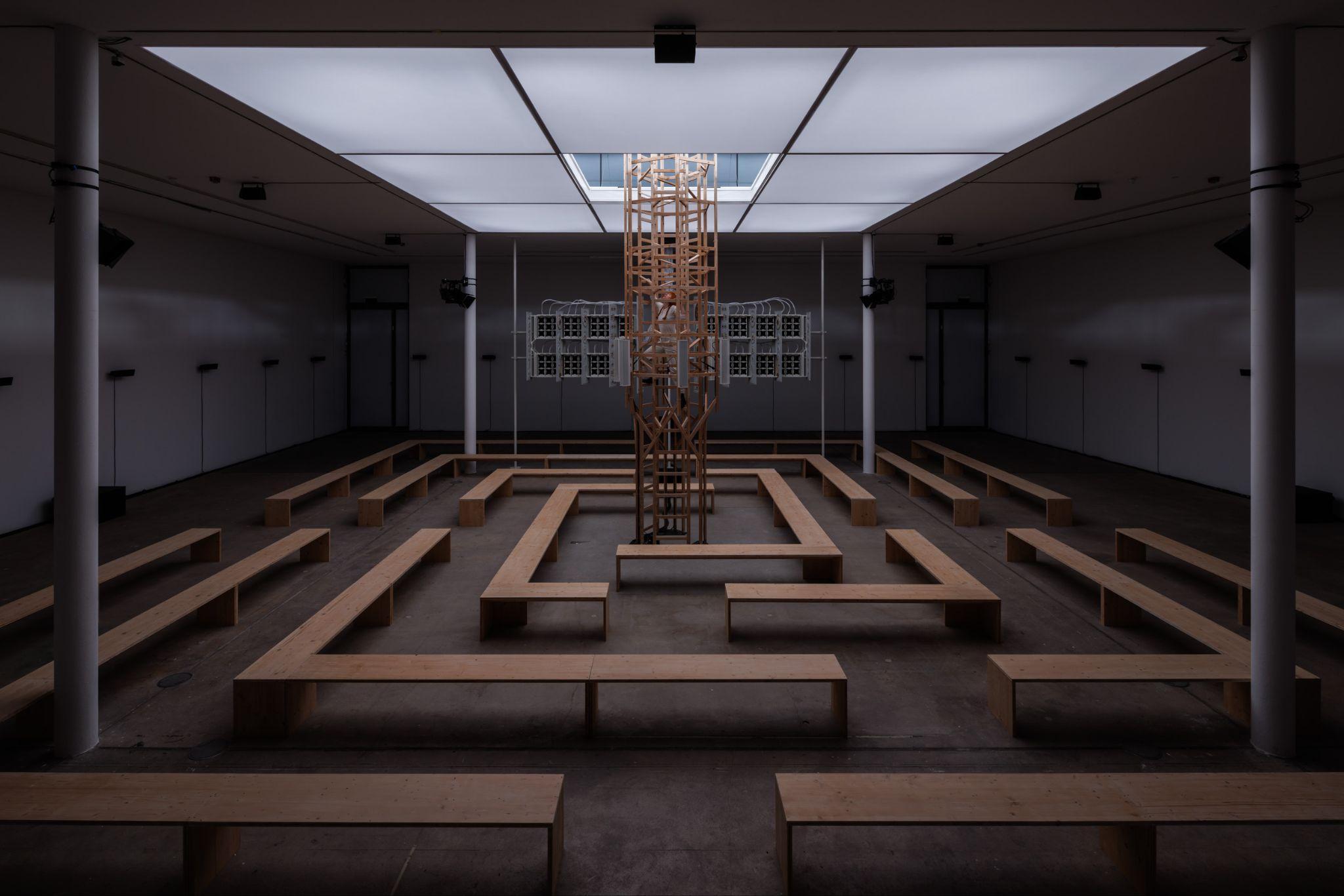
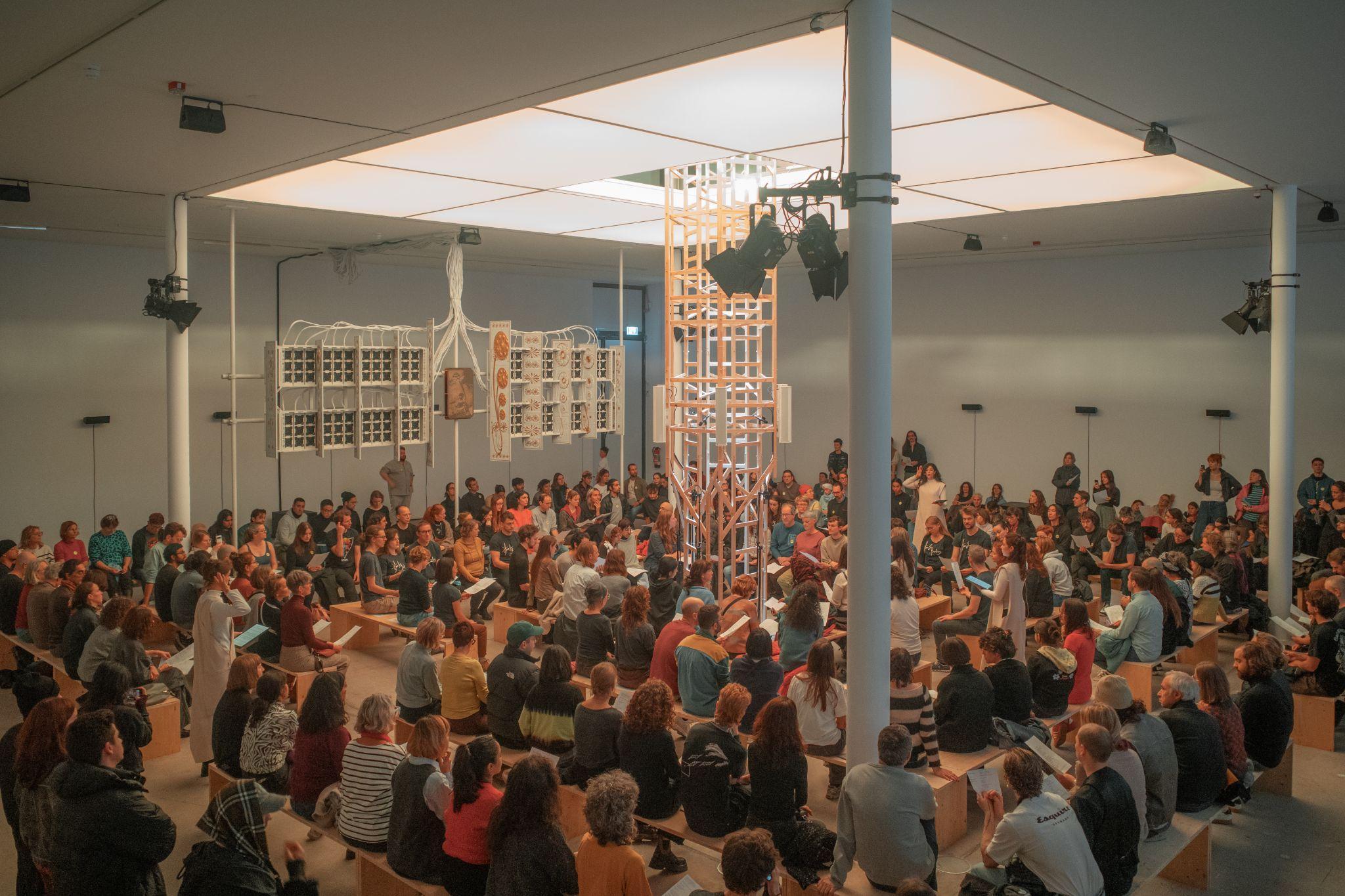
For “Starmirror,” an environment we exhibited in Berlin and Düsseldorf, we created a monastic space, part data center and part choir hall. Inside, an agentic system summoned people to sing together, building a large choral dataset. When not hosting a live session, the room became a listening space. Visitors could hear the voices of those who’d sat in the same spot where they were sitting, while the system quietly trained and generated compositions of its own.
The name “Starmirror” comes from an early experiment in machine-written text. In 2018, Google Brain researchers trained a Transformer model to write Wikipedia articles. Given the article title “The Transformer,” it hallucinated a fictional Japanese hardcore punk band, including the detail that the band split up in 2006, with the remaining members reforming under the name Starmirror.
The name stuck with us. We had built a songbook drawing on Hildegard von Bingen’s compositional logic to coordinate call-and-response performances between visitors and the building. Hildegard was a mystic who received divine hallucinations and sought to reorder the cosmic hierarchy of angels through communion and song.
“Starmirror,” KW Berlin. Photo: Herndon Dryhurst Studio.
Surge Geometria
by Holly Herndon & Mathew Dryhurst
Arranged by Dr. Thomas Fournil
Performed by Sara Gouzy, Marina Kerdraon-Dammekens, Andria Prokopa and the public
We were overjoyed by how many people showed up to participate in these spaces. Thousands came out to contribute to the performances, and many returned simply to listen to the memories they had helped create. People even posted “missed connections” from the training sessions, looking for someone who had caught their eye while training the AI. We used to joke that the ultimate form of these generative spaces might be an agentic dating app, but that joke reflects what people seemed to actually desire from the experience: to find others, and to feel they had participated in something together.
The thrill of that temporary loss of identity—contributing to something greater than the sum of its parts—is what the sociologist Émile Durkheim called “collective effervescence.” The participation is the reward, and full participation produces beautiful things that we could never have anticipated. We produce magic.
AI is just us, in aggregate—the sum total of vast amounts of documented human expression jumbled together.
AI is just us, in aggregate—the sum total of vast amounts of documented human expression jumbled together. Setting aside the necessary debates about the appropriate economics to honor that, there is something sublime to this dissolution of the self. Built from collective contributions, AI is best used to help organize what people do next: establishing a common project and giving people a role to play in it.
We cut our teeth in DIY music culture, where new sounds emerged from interconnected collectives of people trying to make the weekends more interesting. Scenes existed to build structures and rituals that harness people’s energy. We imagine small groups making software for their own use, operating with this same energy.
Historically, keeping an ambitious open-source software project alive relied on a few exhausted utopians giving up their evenings to the painstaking work of maintenance: pushing updates, debugging and holding the hands of non-technical users. But as agentic systems absorb this rote labor, the burden of maintenance is alleviated. With automated software generation, more audacious ideas become possible, so long as we can tease out what we actually want to see in the world and coordinate accordingly.
We call this “Generate It Together (GIT)”: a form of social compute where people and their agents pool attention, knowledge and computing resources around shared projects. “Attention Guild” and “Starmirror” are attempts to build around this principle.
While we live in an attention economy, it can often feel like our attention is not valued very much. To access information we need, or other people, we have to pass through environments and intermediaries intent on hijacking it. An AI-orchestrated future could extend that regrettable habit indefinitely, or be the necessary catalyst to address our failures.
In our studio, we have been experimenting with peer-to-peer software that allows people to allocate tokens and tasks to one another outside of feed-based environments. Rather than our interests creating cul-de-sacs and attention sinks, they could create relationships and roles for mutual discovery and invention.
There is an economic proposal latent in this desire. Left to its defaults, AI could lead to isolation, with each of us burning tokens and pursuing our goals in parallel. 100,000 people might build the same recipe app alone. We would argue that isolation is not a foregone conclusion. By pooling tokens and context around shared missions, we could generate that app together, building on one another’s contributions and exploring the intangible, emergent benefits of being in touch with one another.
The same logic extends to attention. Instead of scrambling to be seen on social media, people could declare what they want to commit their time to and let agents match them with others who share those intentions. This is what we mean by “social compute”: attention and computing resources drawn from a shared pool and allocated toward common goals.
If we understand AI and art as coordination technologies, we already have plenty to build on. We already have the choir, the library, the parliament, the museum and the DIY space. These institutions are not relics to be automated away, but templates to build on. They may only need a firmware update.